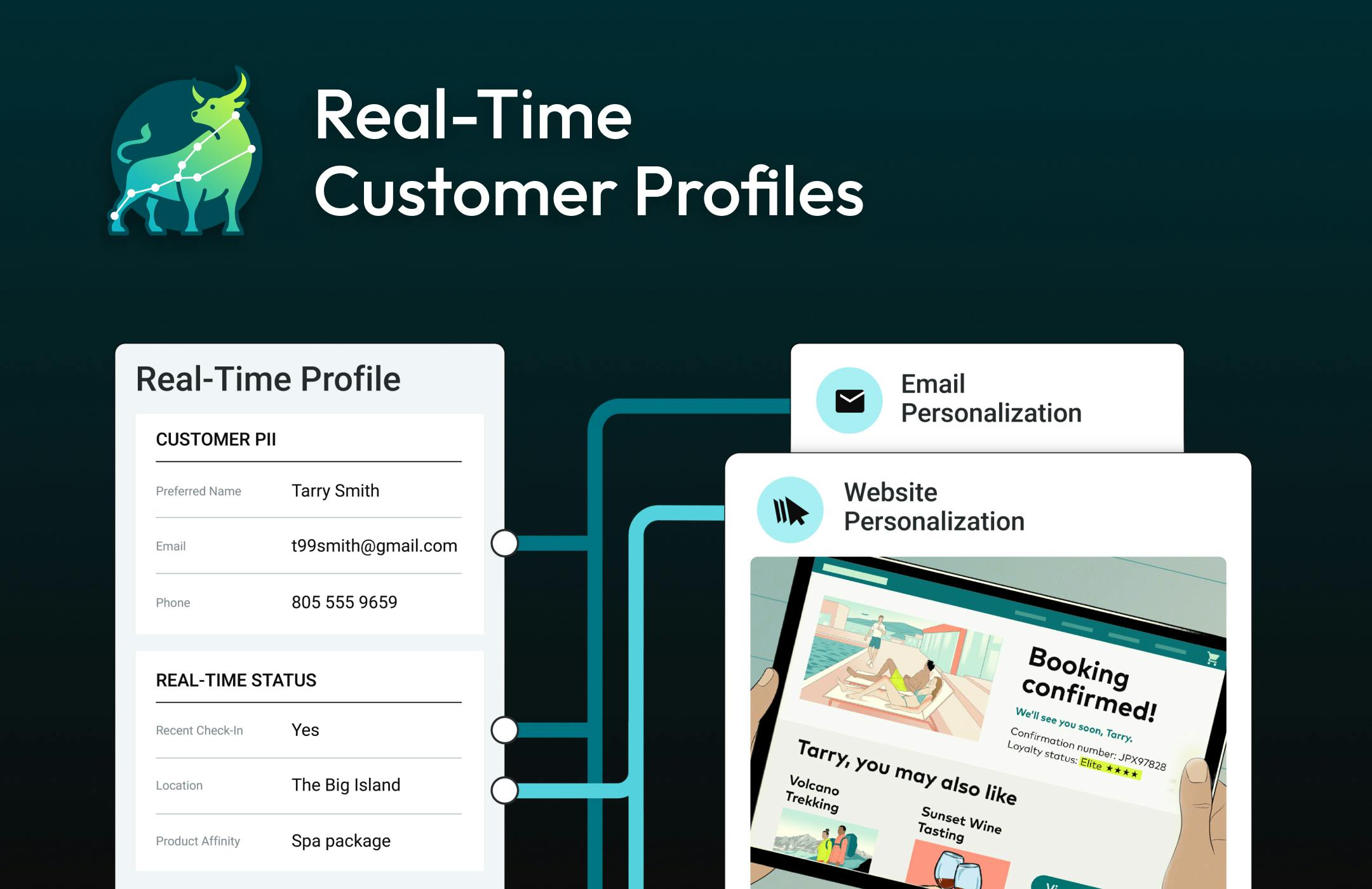
Travel decisions happen in short windows. A traveler abandons a booking, checks in, changes a flight, reaches a new loyalty tier, or arrives on property. Acting appropriately requires more than the latest event. The brand also needs identity, booking and stay history, loyalty, preferences, consent, service context, and operational constraints.
A real-time customer profile makes current signals available with durable customer context for a defined decision. It does not mean that every source, attribute, identity relationship, audience, and destination changes at the same instant. Airlines and hotels should define the freshness and response time each use case actually needs.
Key Takeaways
Real-time travel personalization combines a current event with resolved identity, historical context, permissions, and operational data.
Airline and hotel use cases include abandonment, pre-trip or pre-stay offers, check-in, disruption service, loyalty recognition, and recent-purchase suppression.
Real-time is an end-to-end requirement covering event creation, ingestion, processing, lookup, decisioning, destination delivery, and customer-facing response.
Teams should test latency, identity, consent, duplicate and late events, fallback behavior, and incremental business impact before scaling.
What is a real-time customer profile?
A real-time customer profile combines a persistent customer identity and longer-term history with recently received events or attributes. The profile or lookup result gives an authorized system enough context to make a time-sensitive decision.
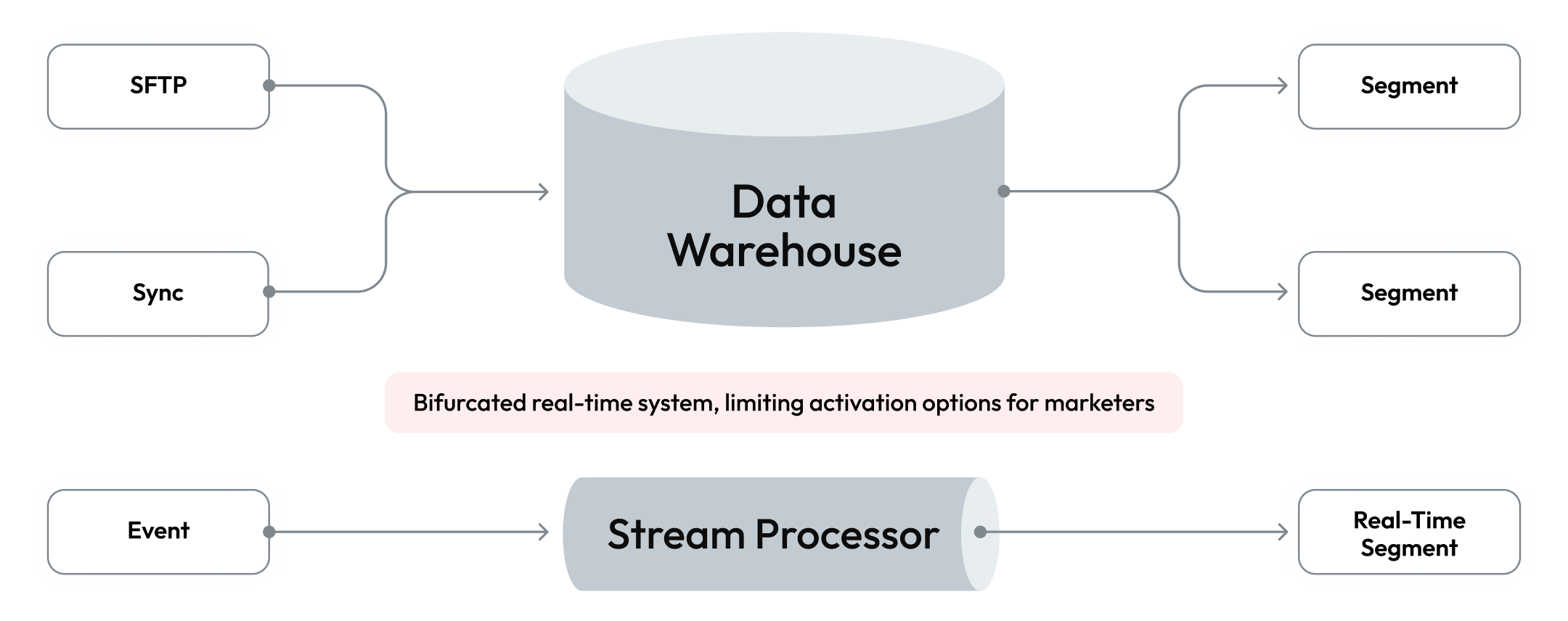
Batch processing remains useful for building durable profiles from broad historical data. Streaming makes new signals available between batch updates. A practical architecture lets the two work together without assuming that a new event must rebuild the entire historical profile.
Why real-time context matters in travel
Travel journeys cross booking engines, passenger service or property systems, loyalty, mobile apps, websites, service centers, payment systems, and on-site operations. One traveler may use different emails, devices, agencies, or loyalty identifiers across those systems.
A recent event without identity can trigger the wrong response. A durable profile without the recent event can miss the moment. Trusted customer context connects the person, relationship, current signal, permissions, and available action so the experience reflects more than an isolated click.
Real-time profile use cases for airlines
Booking abandonment
Combine a recent abandonment event with route, dates, loyalty, past purchases, channel permissions, and current availability. The next action may be a reminder, a relevant ancillary offer, paid-media suppression, or no outreach.
Pre-trip and in-session ancillaries
Use current browsing or check-in behavior with prior seat, baggage, lounge, meal, and upgrade history to inform an offer. Apply eligibility, inventory, price, and frequency rules before presenting it.
Disruption and service recovery
Operational events such as delays, cancellations, or rebooking can be combined with itinerary, loyalty, accessibility, and service history. The profile supports context, while airline policies and authorized systems determine the appropriate accommodation or communication.
Loyalty recognition
A recent status change or qualifying action can inform a journey or frontline experience. Teams should define when the durable loyalty record becomes authoritative and what happens if a streamed event and source system disagree.
Real-time profile use cases for hotels
Booking and direct-channel conversion
Connect recent search or booking activity with stay history, loyalty, rate eligibility, and consent. A hotel can use that context to select a relevant direct-booking message without assuming every visitor needs an incentive.
Pre-arrival personalization
Combine a confirmed stay with prior preferences, property context, party composition, and available amenities to inform upgrades, dining, spa, parking, or late-checkout offers. Validate availability and policy at the time of decision.
On-property service
Make recent check-in, service, and purchase activity available with authorized guest history so staff or applications can respond coherently. Avoid exposing data that the role or property does not need.
Post-stay journeys
Use checkout, service outcomes, and stay history to select feedback, recovery, loyalty, or rebooking journeys. Suppress generic promotion when a recent issue needs resolution first.
How to design a real-time travel use case
1. Define the moment and decision
Name the event, customer, decision owner, allowed actions, required context, and acceptable response time. A website ranking decision may need a different path from a service-agent screen or a message sent after an operational disruption.
2. Map identity and data
Identify the booking, stay, passenger, loyalty, device, email, account, and source keys involved. Define how the event connects to a person and how ambiguous or anonymous activity is handled. Use a stricter policy when a false merge could expose or act on another traveler's information.
3. Set freshness and fallback rules
Document the latency budget from source event to final experience. Decide which attributes may be stale, which must be current, how late or duplicate events are treated, and what the experience does when a lookup, destination, or operational dependency is unavailable.
4. Apply governance
Carry access, consent, purpose, retention, deletion, and source lineage into the workflow. Restrict sensitive itinerary, payment, service, or preference data to authorized roles and uses.
5. Measure the outcome
Track delivery latency and failures alongside conversion, margin, suppression, service outcomes, loyalty behavior, and customer feedback. Use holdouts or other comparison methods where practical to distinguish incremental impact from demand that would have converted anyway.
How Amperity supports real-time travel profiles
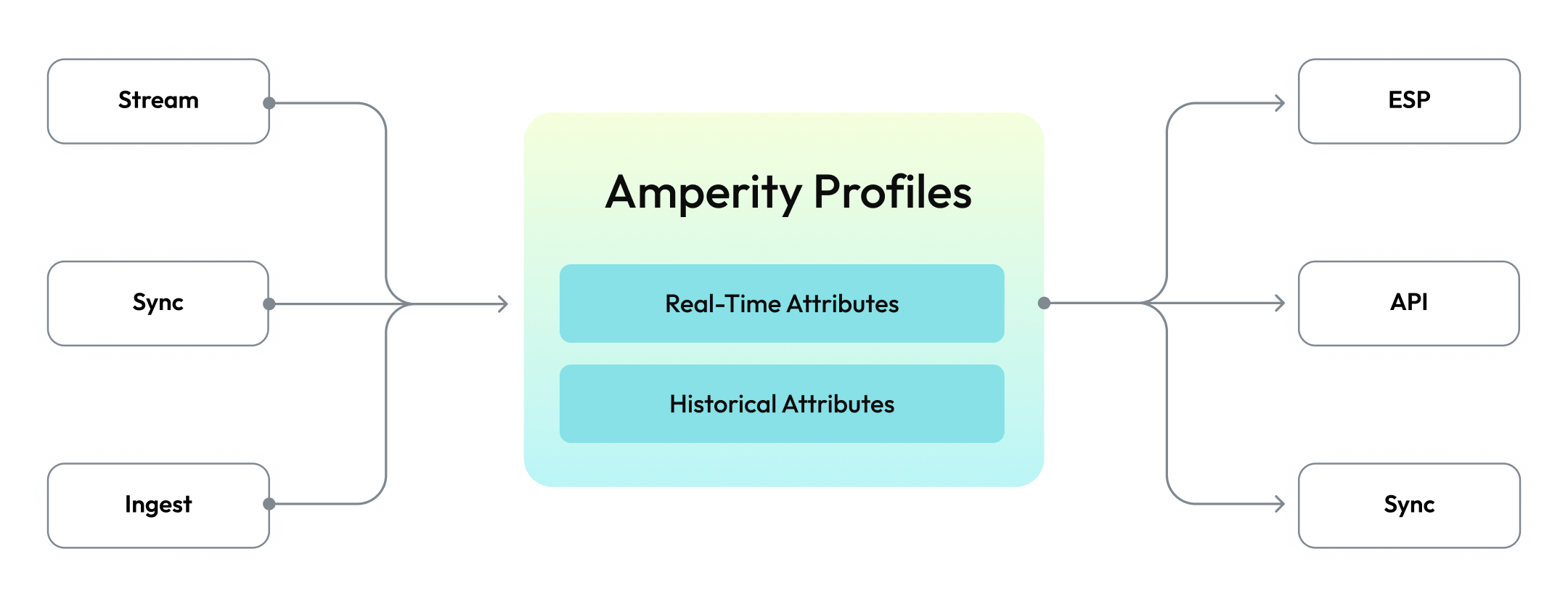
Amperity combines resolved customer profiles with streamed events and real-time lookup capabilities. Current documentation describes APIs for sending events, looking up profiles by identity key, retrieving profiles, and checking real-time segment membership.
Amperity also provides real-time tables alongside Customer 360 profiles for use cases that need data refreshed more often than the typical daily batch. The documentation notes that streamed data can take up to two minutes to appear in a real-time table and that Profile API freshness depends on the latest index refresh.
Airline and hotel teams can use that customer context for personalization, loyalty, service, booking, and ancillary workflows. The specific event, profile, latency, destination, and action still need to be designed and tested for the use case.
See how Amperity can connect traveler history with time-sensitive signals. Request a demo using your systems, customer moments, latency requirements, and activation paths.