Customer Context Is the Currency of Experience
Amperity CEO Tony Owens, Co-founder and CTO Derek Slager, CPO Dr. Grigori Melnik, and Head of Product Marketing Kate Hodgins took the Amplify 2026 stage to unveil four major platform launches and preview Amperity’s vision for agentic marketing. Lori Ho, Managing Director of Growth and Lifecycle Marketing at Alaska Airlines, joined Derek Slager to share what a decade-long partnership with Amperity has enabled, and why Alaska is helping shape the next generation of customer intelligence and AI-driven engagement.
Top Takeaways
The biggest growth gap today is the gap between insight and action. Most brands are using only a fraction of the customer data available to them, and when personalization happens, it is often irrelevant or poorly timed. The shift Amperity is driving is not just about processing data faster. It is about moving from inside-out, rules-based marketing to outside-in engagement powered by real-time customer context, where brands can respond in the moment instead of reacting after the fact.
The launches focused on turning customer intelligence into action. Amperity introduced new real-time capabilities for site personalization and journey abandonment recovery, Recommended Actions that surface next-best opportunities automatically, and the AI Assistant that helps marketers move from question to audience to activated journey in minutes. The company also unveiled its MCP server, which connects governed customer intelligence to enterprise AI tools including Microsoft Copilot, Claude, ChatGPT, Salesforce, and Slack.
Agentic marketing is already taking shape inside leading organizations. The session previewed a future where AI agents continuously monitor performance, adapt to changing customer behavior, surface recommendations, and improve outcomes over time. But the core message from Alaska Airlines was clear: none of it works without a trusted customer data foundation. The organizations making the most progress are not trying to design perfect journeys upfront. They are testing, learning, and improving continuously based on real customer signals.

Recommended Sessions
Video
The Moves That Matter
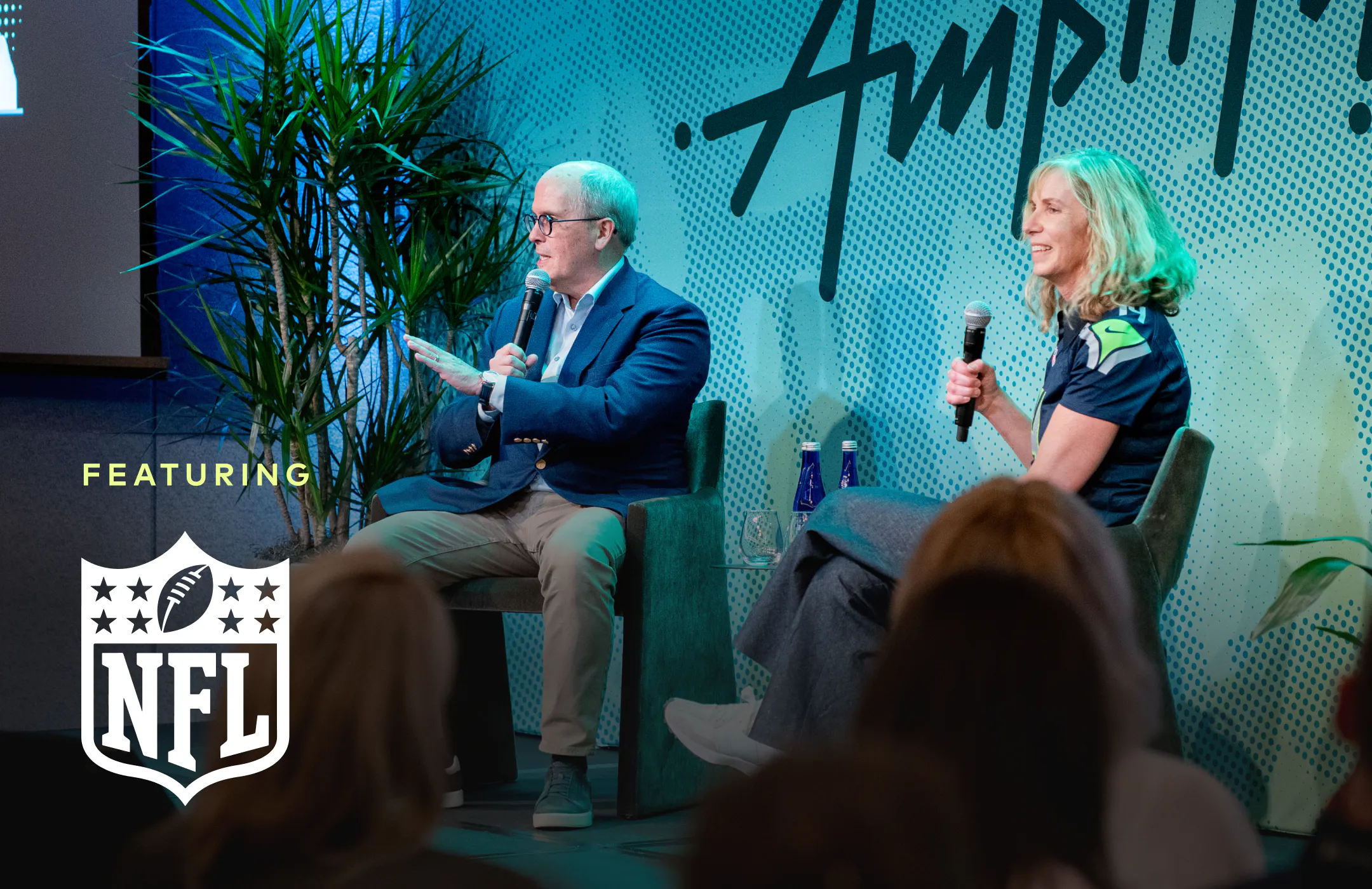
NFL Chief Data Officer Paul Ballew shares what fan obsession looks like at scale, and what every brand can learn from it about customer centricity and AI.
Video
Turn Fragmented Data Into a Customer Lifecycle Engine
When a leading financial institution unified customer data across a complex, multi-system environment, the goal was never just cleaner records. It was faster go-to-market, stronger engagement, and new revenue. Hear how one leader turned data infrastructure into enterprise-scale business outcomes.
Video
Activate Your First-Party Data. Capture More Revenue.
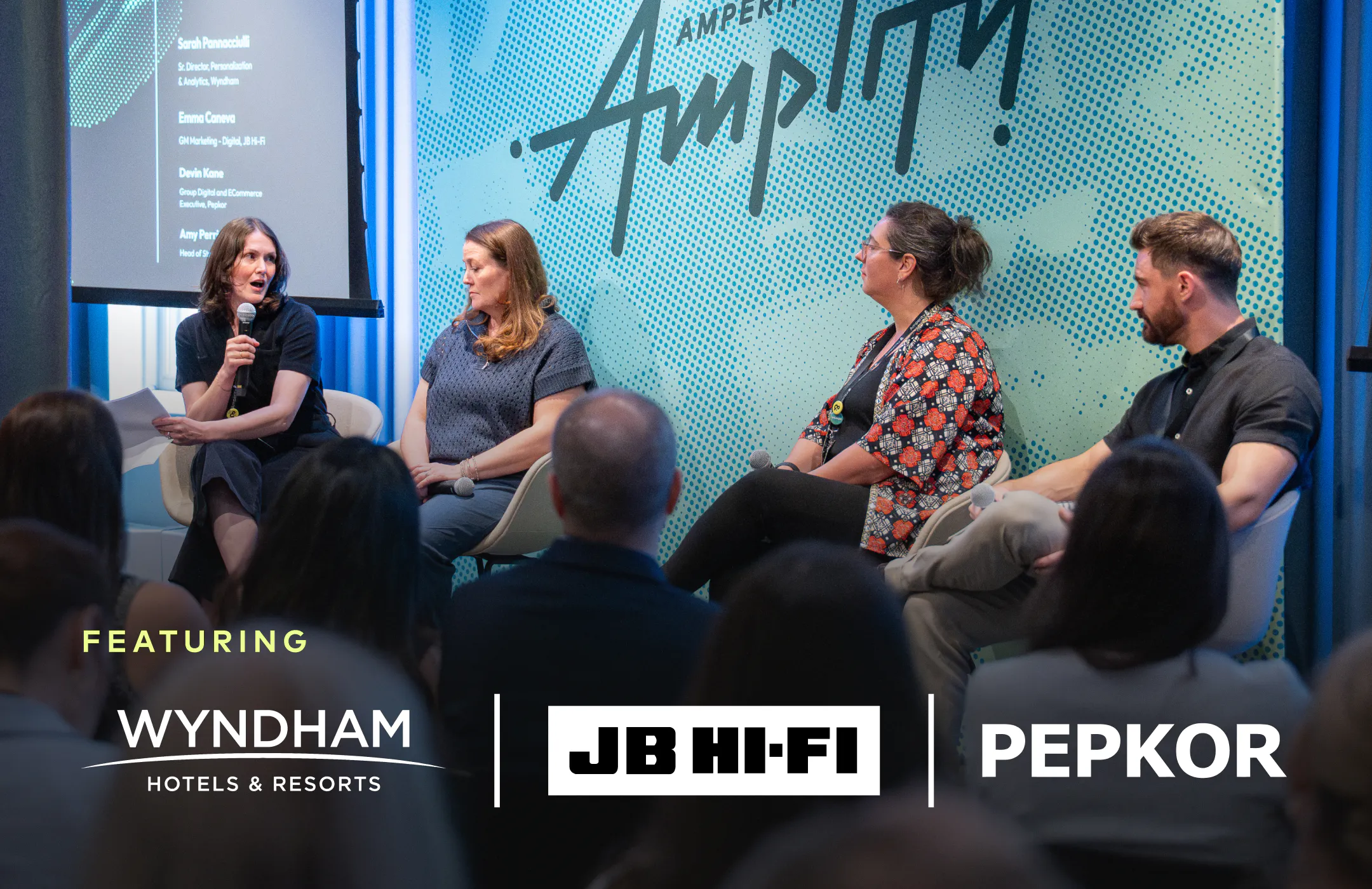
Your first-party data can do more than target. Hear from leading brands actively making their data go further — from suppression targeting and conversion optimization to audience monetization — to cut spend and unlock net-new revenue. Walk away with strategies you can act on now.
Video Transcript
TONY ALIKA OWENS: Good morning everyone — how's everybody doing? Awesome. Sounds like there was a lot of breakfast being eaten. I'm super excited to be at Amplify in New York City. We have a great agenda for you today. We're going to take you through this keynote where we'll tell you about what we see going on in the market. We're also going to give you demos so you can see what's going on. And then we're going to have a customer come up — not just any customer, our very first customer, Alaska Airlines. We've had Alaska as a customer for 10 years, which is absolutely incredible, and Lori can walk you through her story. Then we're going to take you through our framework on how you get return on customer data — we call it ROCD, Return on Customer Data — because it's not just important that we have all the solutions that work; we need a business case that can be provided to the rest of the business.
With that, I want to start with gratitude, because that's part of our culture. Thank you to our incredible customers — thank you for always being there with us and working on making our systems better. Thank you for all the partnership we've had over the years. I also want to thank some of our future customers who are in the room — we're looking forward to partnering with you. And to our partners that you can see on the screen right now: we have an incredible group. You're going to be seeing some of those partners present later today, including Microsoft, AWS, and Databricks. Thank you, because you help make our customers more successful.
So let's talk about the market. We've been chasing a better customer experience for years. In that pursuit, we've tried to reach higher levels of personalization and approach customers differently. But we've also had some incredible challenges along the way. We've gone through waves of change. As each wave comes through, we get more and more data. When the internet arrived, we got online and email. Then we went to mobile, which gave us SMS and apps. We continued getting more and more complex data. Then we moved into social, which started giving us contextual data, passive signals, and in some cases active signals — and more data kept flowing in. How do we process all this data coming in unstructured ways?
And now we have AI. There's not a meeting that goes by where we don't talk about AI. What I like about today is that we're actually going to show you AI in action, delivering outcomes. When I think about all the data that's ever been produced, agentic and synthetic data is being generated at a pace where, over the next couple of years, it will actually eclipse the entire existing data asset landscape. That only creates greater complexity. So while this complexity is building and the volume of data keeps growing, we've also introduced over 15,000 applications into MarTech — all to take advantage of data, but also creating massive complexity in the process. Inside all this complexity, how are we going to metabolize it all? We've basically been looking for the same needle in the same haystack — except the haystack has gotten bigger and more complex over time.
What has all of this produced? We're only using 25% of the total customer data available to us. And personalization — when it does happen — is irrelevant or mistimed 79% of the time. That means the overwhelming majority of what we send out, even after curating audiences, building the right segmentation, and applying the right attributes, we're still missing the mark. And in a survey, 63% of customers said they would leave a brand based on the experience alone. You could have the right product and the right supply chain, but if you don't also have the right experience, the equation is incomplete — and people will look at their alternatives.
So while all this is happening externally, what are we experiencing internally? Marketing has requirements on it. We hear that data is readily available, so we go to our technology team. The technology team certainly wants to deliver — they provide us with information so we can create audiences. We question the data because that's part of our job. And by the time all of this is going on and the campaigns are out the door, the customer has already moved on. We're falling into the Drucker philosophy: internal requirements and external forces will require us to make changes faster than the two combined. Do we have the systems that will allow us to metabolize all this data and information and reach the customer while they're constantly moving forward, as we compete with every other experience out there?
This is the challenge in front of us. And unfortunately, the result for customers is a very messy experience. There's a gap between the experience they receive and their expectations. If you want to know what a consumer's expectations look like today, go to the app store and download the top 10 apps. How many of you came here this morning on Uber? A handful. How many use DoorDash? More people — good, because I thought it was just me four nights a week. In DoorDash, you start to see supply chains being married to the experience, with full visibility. When customers see that kind of experience in the top 10 apps, they expect every experience to match it. Consumer behavior is being driven by the consumer apps available to them — so how are you going to match that?
What if we could act in the moment? Not guessing. Moving at customer speed. Campaigns more on target. Getting immediate answers to what are usually opaque processes. The most frustrating thing is being inside a process without knowing all the steps, trying to figure it out — it feels like an Easter egg hunt while you're trying to get something done quickly. Here's what I'd tell you: AI has changed the opportunity, and we're going to show you how today. The rules have changed. And we're going to reimagine how you can work with your customers in many different ways, using the same system.
AI is the unlock. Here's the premise: you're not only going to keep doing what you've been doing — going inside out — but you'll also have the opportunity to go outside in. Inside out is what we typically do. It's a rules-based system: you create a journey, it's based on an audience you've given attributes to, you don't like the size so you change the attributes. That doesn't necessarily improve the customer experience, but you work the rules — if this then that, like a Visio diagram. The reason we've continued to see less than 3% productivity improvement, even with way more data and all these apps, is because we've always applied the journey to the customer and presumed we know them. That's inside out. Outside in means being part of their journey, making their day easier, being in the moment with them, allowing them to guide it. The same way you think about Uber and DoorDash — where people are declarative about what they want and fill in the components — that's what we want to enable all our brands to do.
There are four areas we need to get to, and the first starts with context. Here's Susan in the morning. Because we know so much about Susan, we know she goes into the office four days a week and typically leaves her house at 7:41 — we have granular details like that, based on all the data organized and made visible to us. So around 7:35 AM we say: "Susan, would you like that Uyghur coffee on the way to work? Here's where to stop and it'll be ready." You are not going into an app. You're not trying to figure out how many stars you have. You're not going through seven clicks on an order. We're not interrupting your day and throwing a $1-off offer if you add food. That's the old experience — that's rules-based, and we're presuming that's the incentive that will drive change. Susan already knows she wants coffee. It's just a matter of: can we deliver it to make her day better? Over time, we move to one-click ordering, almost like an SMS exchange: yes, order gets placed. We go straight from being part of her day to delivering an outcome. And then — are there any other things Susan would want as part of her day? If you have context in your AI system, you can deliver experiences like this.
The second component: moments are perishable. In this example, she's reached out to Brooks — a phenomenal Amperity customer. While she was at the New York Marathon, she saw the Glycerin 23s. Because of what we know and how we can engage with her, we can say: "Would you like to click to reserve your size? You can pick it up at the store closest to you across the bridge, or we can ship it." And we know purple is her favorite color. Two things happen there: we check inventory for the purple version of the Glycerin 23s, and we also permanently store in her profile that purple is her favorite color. We continue building Susan's profile over time.
Third, it has to be actionable. Based on everything we know and the information we're capturing from Alaska Airlines, we start putting her in the right moments. This isn't what you see in typical systems — "we have this massive inventory, let's give this audience a discount" — where click-through rates and conversion rates are extremely small. That's where you get that sub-3% productivity. Instead, we deliver what it actually looks like to be in Juneau, Alaska, shown through the eyes of other people who've been on that trip — and she's one click away from booking it. Because we have Alaska's loyalty program, there are other things she could be doing with Alaska. Typically, when you put a loyalty program in front of customers, you try to walk them through it hoping they'll adopt it. But if they have an actual experience with the program, the conversion rate becomes far higher. Now they feel like they're in the program — it's not the program being impressed upon the consumer, they're in the program and experiencing how much better everything becomes.
The fourth component is learning. The system is always learning. We've imported all the information, so we know Susan gets a new ensemble every spring. Nordstrom — another great customer of ours — puts this out in front of her: "Would you like to shop this spring collection?" We know her favorite color is purple — everybody understands, lilac is purple. She can look at the color palette and shop — but we put that front and center. And by the way, would you like to accessorize? We'd like to introduce you to the Darcy bag. She can now add a bag, and the bag gets put onto the ensemble. If we're listening and responding over time, we can move from this to engagement, from this to inventory, from this to in-store experiences. The system has to constantly be learning so we can deliver these kinds of experiences.
When we do this well, every customer starts to feel like all the interactions are just for them, in the moment. You are not casting a wide net hoping to catch fish. You are very targeted in what you are doing. You are actively engaged in conversations. And I think the biggest payoff is when customers are proud to recommend you. It's not just add-on sales — they start telling all their friends. We've all seen that lean-in factor, that aha moment. I call it the ChatGPT moment: you put something in, and when it gave you that answer, you were like, "Holy crap — I have to tell somebody about this." This is the kind of experience we want to start creating for our customers, and this is where the Amperity system comes in.
We designed this system after having our big ears on — listening to an amazing customer advisory board that continued to give us feedback on what they need. On top of that, a bunch of our partners came in and said, "Here are the capabilities that could exist and you should be designing a system that looks like this." Rather than just telling you, we're going to show it today.
Here's how this works. We said we need to design a system where you go from guessing to knowing. There's all this disparate information spread across different places — it has different components but it's all about a profile for one person. We're going to take all that information, aggregate it, and make it about that person. Not about all these different silos. The second thing: we go from knowing to acting. We know all this information — so why aren't we acting on it? There's almost a brand promise being left on the table. If someone has given you all this information and you're not acting on it, they feel like you don't really know them. Now — Paul is a diamond customer who loves fly fishing, and he's been looking at gear online because the season is opening up. He's now coming into the store. We can arm the store associate with his background, and we also know that in this particular case, sizing can vary between brands. So we can say: "The last time you bought that jacket, you got it in a large — would you like to try it in a large again this time?" You reduce returns, and now the customer feels genuinely known.
We go from knowing to acting, and then from continuous campaigns to continuous engagement. We're going to organize and ingest all that data — zero-party data from chat and prompts and search — in the background so we can create a richer profile. We now have all four elements: it's contextual, it's real time, it's actionable, and the system keeps learning.
This also changes the way we work internally. Before, we went on a random walkthrough of different departments to gather information. Now we're streamlining: don't give me more extracts, don't give me more lists — just give me the profiles I want to activate against. Here are the attributes, here's the information coming back, and I have a live profile. When we get all this right and are doing it in a way that enables real engagement with the customer, you see the impact: business results go up, and at the same time you're elevating trust. When somebody trusts a brand, that trust becomes the moat — not just your product or your pricing. Every other experience starts getting compared to yours. With that, I want to bring to the stage the people who are going to show the live system. Please join me in welcoming Grigori, Kate, and Christian.
DR. GRIGORI MELNIK: Thank you Tony, thank you customers, thank you partners, thank you analysts, thank you teams, thank you for coming, thank you for all the feedback. The pace of technological innovation has been relentless at Amperity. We've shipped a lot — too many things to enumerate — but the main theme is how we can make everything more usable, more friendly, with radical simplification and self-service. That's the name of the game. Alongside all these amazing capabilities that our engineering teams have delivered, I want to make sure we also meet you where you are. We know you're scaling your businesses globally, so we've extended our footprint in data centers around the world — in Europe, Canada, and more recently in Australia and New Zealand. I know some of you traveled all the way from Australia for this event — we value your business and your time. So today we're going to show you some of the new exciting things we're releasing, and we're going to show you some demos.
KATE HODGINS: We shall. First and foremost, what Grigori shared is really just the beginning. With his help and with our partner Christian here, we're really excited to show you how we're helping all of you — marketers and analysts alike — move from insight to action faster and more confidently, in a way that lets you create experiences that are relevant, contextual, and personal for your customers in the moments that matter most. All right, let's get started.
Tony mentioned Susan earlier — she's the main character in our story. Susan is a traveler. She's online, scrolling, and she sees an ad for an adventure trip in Kauai. Incredible hikes, amazing views, expansive whitewater. She's also traveled with Amp Adventures several times before, but it's been a few years, and the ad has triggered the itch. So she clicks in. As we follow Susan, I want you to notice a couple of things. Watch her profile. Right now, we don't know Susan yet, but we're already learning about her — how she came in, that she's interested in destination backpacking. As she explores more, her profile keeps updating. We find out it's not just destination backpacking — she likes the adventure component. She's very interested in Kauai. She keeps digging into experiences around that, and she's labeled an economy traveler.
At this point, most brands really don't know much about the customers they're interacting with. The experience feels generic. Meanwhile, the Amperity system is already learning everything about Susan — what she's interested in, what she's exploring, what her intent is in this moment. So when Susan finally identifies herself, the experience doesn't restart — it just picks up, more personal and relevant to her. She's eager to book and clicks in. But I want to pause here. This part of the experience is what quietly separates brands that feel transactional from brands that feel like they truly know you. The moment Susan logged in, her entire profile expanded — her history, her preferences, her behaviors, her patterns. While she may browse economy, she consistently books luxury experiences: premium stays, first-class flights, extra packages. That is the context that matters.
Instead of showing her a generic offer, Amp Adventures presents her with an upgraded luxury adventure package, just for her in that moment. This is the kind of experience Susan has chosen time and time again. And this isn't the old version of personalization — it's not about segments and cohorts. It's personalization powered by Susan's full historical context with your brand, adapting to what she's doing right now. For Susan, this means an experience built just for her. For Amp Adventures, it means higher conversion and higher-value bookings.
DR. GRIGORI MELNIK: This is precisely the moment where other platforms fail — the moment where we're able to stitch identity across any channel, any device, in real time. This is one of the hardest problems in our space. It's not just data — it's behaviors, signals, interactions, in all kinds of shapes and forms. This is what Amperity solves. We're bringing together historical data and real-time streams into one always-up-to-date view of the customer. While others may do this in batches — effectively acting on what happened yesterday — we are able to do this in milliseconds.
KATE HODGINS: That's right. So we're back with Susan. She adds the trip to her cart, but before she books, she wants to check the dates with her husband Jack. As life happens, she gets distracted — we've all been there. A little later, she gets a text message. Amp Adventures knows this is her preferred channel, so that's how they're choosing to engage. Still thinking about Kauai — of course she is. She comes right back to where she left off. Nothing is lost. She doesn't have to start over. And now with all this context, her virtual concierge Fritz jumps into action: "Hi Susan, I see you're looking at a package in Kauai." Fritz knows who she is, what she's been exploring, where she left off. Susan doesn't have to repeat herself or re-explain anything. She just keeps planning.
As she's engaging with Fritz, she says she wants to make sure she gets into one of the best restaurants at the resort. She asks Fritz to take care of it. And recognizing that Susan is a gold-tier customer, Fritz proactively books her a priority ocean-view seat — because context about Susan tells us that's the experience she'll want, that's what she expects. Now she's ready to go, she books, her profile updates in real time, trip confirmed. Susan is on her way to a long-awaited trip. For Amp Adventures, she's booked extra experiences, it's a higher-value booking, and they've established a stronger customer relationship — because they recognized who she is, right now, and what motivates and drives her.
Let's fast forward. They're on their trip now — in Kauai. Susan and Jack are just getting off three days of the backpacking portion of their adventure. They come into the resort, and Susan gets an alert: a welcome reminder that she has dinner reservations that night. But you'll also notice she was given a curated offer — there was a last-minute opening at the resort spa. She was offered a five-star experience. That experience wasn't random. It was selected just for her, based on who she is, what she loves, and the experiences she's come to expect based on everything she's done in past vacations with Amp Adventures.
DR. GRIGORI MELNIK: And after a three-day hike, they must be tired.
KATE HODGINS: Exactly — who doesn't want a nice massage after a hike? But what's really powerful here is this: the same profile that powered the offer, the booking, and the digital concierge is now the same profile powering her in-resort experience, selecting the right offer for her. For Susan, this is about creating those moments that matter — seamless, frictionless, feeling seen, heard, and valued. For Amp Adventures, this is how they create the moments that build deeper loyalty, more repeat trips, and higher customer lifetime value.
DR. GRIGORI MELNIK: That's right. And this wasn't just a campaign — what you just saw was a connected experience, built around one specific customer, the customer of one. All of that is made possible by what Amperity has put into your hands right now. We can recognize customers just in time, in the moment. We personalize as it's happening. We capture revenue before it's lost. And by the way — the way we've built this, all these use cases are ready for agentic commerce. What we demoed was Susan the human shopping and browsing. But we know shopping agents exist and more are coming. Whether it's Susan the human or Susan's digital twin doing the shopping, we're there to support you.
KATE HODGINS: Now, we've talked a lot about Susan. But as we all know, behind every Susan there's a Jess — Jess is a marketer at Amp Adventures. Let's take a few minutes and look at what the experience looks like for her. This is Jess's view inside Amperity. On the left, you'll notice she has a view of what's happening across her customer base: the champions are decreasing, and over on the right, she's acquiring new customers — but those customers are lower in value. So she's doing a great job acquiring, but they're not the customers she really wants.
A lot of platforms will give you information and insights. What's different about Amperity is that we now give you the actual recommended actions Jess can take — all based on her data, built on the historical information from programs that have run previously. Now she knows exactly where she wants to focus. She can choose from retention plays, growth plays, or top picks. She chooses top picks, and her next step is obvious: reactivate 250,000 lapsed champions. This is her biggest opportunity, and it was all surfaced automatically. Jess can move from insight to action almost immediately.
DR. GRIGORI MELNIK: And this is the key. Jess is not wrangling data from three disparate reports trying to glean some insight. The diagnostics are done for her. It's simple, straightforward, and ready to go. No SQL, no waiting, no tickets. Normally, Jess would have to take this data and turn it into some kind of strategy doc. But what happens instead is that the system gives her a starting point. And I know there looked like a lot of text there — that was by design, because we follow the principle of the glass box. We want to make sure the system is not only offering the recommendation and doing something useful, but also explaining how it arrived at that recommendation.
KATE HODGINS: From here — this is what I get really excited about as a marketer — notice what happened automatically: the journey was created. This wasn't a marketer clicking and dragging to build the journey. The system did it for her. She didn't have to pull in the analysts. She didn't have to build the segments, define the treatments, or decide on the A/B testing. All of that was done for her automatically. What would have taken weeks now takes minutes for Jess.
DR. GRIGORI MELNIK: Wasn't that amazing? What you just saw are two new releases we're announcing today. First, Recommended Actions — where we help you make decisions so you can respond faster and drive greater impact for your businesses. And second, the Customer Data Assistant — where you go from question to segment to journey to action in minutes, all done automatically.
KATE HODGINS: As much as we here at Amperity love our UI, we also recognize that marketers don't spend their entire day living in customer dashboards. We all live in Word, PowerPoint, Teams, email, send tools, Slack — whatever your tool of choice is. That's really where the work gets done. And historically, this is where things can often break down, because while you're working in one set of productivity tools, your data is living in another. That means downloading CSV reports, copying charts into slides, creating tickets to send to analysts, chasing updates, and all the anxiety that comes with that workflow. By the time you're ready to act, the moment has passed. What we're really excited about today is to show you how we're changing that.
DR. GRIGORI MELNIK: We really wanted to solve this problem — to collapse it and give you the ability to do things within the tools you already use every day. So today we're introducing the Amperity MCP server. By adopting the open Model Context Protocol standard — the backbone of any major LLM provider — Amperity now becomes the intelligence layer for your enterprise AI ecosystem. That system securely connects to your customer data — securely, because all of your guardrails, policies, and role-based access controls are respected. When AI plugs in through the MCP, it doesn't just see a tabular database. It sees a semantic map, identity resolution, calculated traits, predicted long-term value — all the things you're able to get through the user interface. Now, through the MCP, AI is able to do that as well. And importantly, AI is not guessing, not hallucinating numbers. It is querying governed truth. The Amperity customer data is the governed truth for your customers.
Today we're going to show you how we solve this with Microsoft, since Microsoft has 450 million users — and many of you are using these tools. Why not show how marketers can use their productivity tools with the Amperity MCP? This is the Microsoft Copilot Studio — the place where Microsoft lets you configure AI agents. There are a whole bunch of agents in the marketplace and you can build your own. So that's what we did: we built an Amperity marketing agent. It was pretty straightforward — all we had to do was connect it to the MCP server. And there it is — the MCP server is exposing all the functionality we have in Amperity through a set of tools you can now take advantage of, all or in part, with policy controls around read-only access and so on. It's all configurable.
KATE HODGINS: It's Friday afternoon. Jess gets a message — leadership wants a brief on the Winback campaign she just ran with her champions. Catch: they want it by Monday. Normally this would mean digging through dashboards, old decks, team Slack channels, emails — anything to help tell that story. But now, in Teams, she just prompts the Amperity marketing agent to draft the executive brief for her. It then creates the Word document and the PowerPoint slide.
DR. GRIGORI MELNIK: Look at that — this is Word.
KATE HODGINS: That's still in Teams actually, and here's what it looks like in Word. We won't go through it in detail — we've all seen a briefing doc before. But the cool thing is if she wants to make edits, she can just pull up Copilot, engage with the Amperity marketing agent right there, and make the edits. The PowerPoint opens automatically as well. Everything is right there for her. What would have taken hours yesterday takes minutes today. We're really excited for all of you to start exploring and using this in your day-to-day.
DR. GRIGORI MELNIK: This deserves applause. What you just saw is enabled by the Amperity MCP server, and it is available to you today. One more time: this is not generative AI making things up or fabricating numbers. This is what we call grounded AI — where Amperity MCP is reaching inside the Amperity customer platform and enforcing all of your enterprise governance. The data stays in your data warehouse — whether it's Databricks, Azure, or Snowflake. And your data is never used to train public models. I'll repeat: your data is never used to train these public models.
But this is not just a Microsoft story. Because we chose the open standard, this is an extensibility story. Regardless of what you're using — whether you're in Claude, ChatGPT, Perplexity, or using packaged apps like Salesforce or Slack — as long as they can connect to the MCP server, or even your own bespoke applications built internally, you can build enriched experiences, get all this valuable data, and deliver more value for your customers and yourselves.
KATE HODGINS: Excellent. Let's recap what we announced today. First, real-time solutions for site personalization and journey abandonment recovery. Second, Recommended Actions — using your data to surface the next best action you can take to grow your business. Third, the Customer Data Assistant — a tool that lets you explore your segments, activate customers, and go from insight to action in minutes rather than days and weeks. And fourth, the Amperity MCP server. These are four launches, all available to you today, all purpose-built to help you turn insight into action faster and more confidently than you've ever been able to before.
DR. GRIGORI MELNIK: Thank you. And this is just a quick overview of these four big announcements — there's a lot more. We have a dedicated breakout session that our product management team is leading today, so please attend. You'll learn more about everything else we've released, and you'll get a preview of our roadmap for the next couple of quarters.
KATE HODGINS: Grigori, I know your team has been secretly working on something new. I'm curious if you'd be open to giving the people here at Amplify a peek behind the curtain.
DR. GRIGORI MELNIK: I would. Do you want to see something really, really new? Since you're such an amazing audience — just because of you — we're going to show something we're building together with our customers. The idea is: what else can we do? Yes, we've improved the existing platform, and you've seen all that greatness. But is there something we can do to drive 10 times, 50 times productivity? Something that will allow you to manage far more and gain far more advantage in the market? So we started reimagining how you, the marketers, might interact with data. Let us show you what this experience might look like.
This is aspirational, future-looking — but let's just see. Remember Jess — she just launched the journey to reengage lapsed champions through the Customer Data Assistant. Now she's coming back to check on how it's doing. The important part of this new experience is that the agents reporting on the campaign haven't just executed it once — they're constantly monitoring, constantly looking for nuance and signals. And what you see here: the reactivation rate is up, incremental revenue is better. But the key is that this isn't just measurement. The AMP agents are also able to offer recommendations — based on this constant observation. Let's look at what the proposed recommendation looks like. It noticed that most customers are converting in the 19th hour, which is interesting because it means the last two phases of the five-wave sequence we launched are running late. It's working, but it's suboptimal. So the agent is automagically recommending we collapse this into a three-wave sequence. You can see exactly what that recommendation looks like.
KATE HODGINS: Let me jump in here. This isn't just building a journey or putting together an email. It's designing your entire content strategy, orchestrating across channels like email and SMS, setting up your A/B tests, and learning what's working over time — bringing those learnings back into the system. All of this used to happen across disconnected systems: one tool for content, another for testing, another for journey orchestration, another for sending. This is essentially your agentic team member, working with you to build a campaign, activate customers, and design for impact.
DR. GRIGORI MELNIK: And you're still in control. If you don't want the agents roaming freely, they can monitor and observe and make recommendations, but you're in charge. You approve and execute. And then the AMP agent takes over the execution and observability from there, continuously monitoring the new three-wave sequence.
Two weeks later, Jess is back in the AMP dashboard. Based on its learning, the AMP agent has identified another trend: a lot of bookers going through a high-risk area with a high cancellation rate. And it automatically says: what can we do here? It doesn't just offer some discount — it offers a real solution, proposing an early arrival campaign. It comes up with the top three approaches based on past experiences, and even drafts some copy. It suggests Patagonia, it sees some Iceland options.
KATE HODGINS: Wait — you mentioned Patagonia. We're trying to reengage customers. I noticed this campaign seems to be for —
DR. GRIGORI MELNIK: Santiago Wine Country. Yes.
KATE HODGINS: But that's the wrong season, isn't it? What happens if we just pose that question to the agent?
DR. GRIGORI MELNIK: Let's see. The agent is smart enough to self-correct — and because of the seasonality issue, it immediately swaps the wine tour for a winter trekking trip, which makes much more sense. And the important thing now is that this correction, this learning, this indication you just provided is going to become part of the collective brain. It's compounded learning that will guide all future recommendations. The seasonality correction is now part of every future decision.
Now there's another recommendation surfacing. Because this winter trek in the national park in Chile was so successful, the AMP agent is able to say: apply this for past climbers. This is based on everything the system has learned. Let's look under the cover. Remember: there was a campaign, we learned from it, then more learning happened. This latest recommendation is based on four previous decisions — the seasonality guardrail Kate just corrected, the early arrival campaign from two weeks ago, the three-wave cadence from the week before, and an action from two years ago that's also now part of this collective decision-making. This is the power of AI. This is the power of agentic marketing. This is the power that will make you heroes in your department.
KATE HODGINS: I'm really excited about this, and I hope you all are too. After the session, Grigori will be happy to answer additional questions.
DR. GRIGORI MELNIK: And this is coming soon — we're rolling it out in stages through private betas and private previews. First, I want to say thank you to the design partners who were engaged in building this experience. This wasn't invented in the dark corners of a product lab — it was built in collaboration with you, and I know you're here, so thank you very much. For those who want to get on the ship of agentic marketing and work with us to develop it further, and who want an early preview, please send us a message at future@amperity.com. We'll get in touch and make it happen.
Let's sum up the agentic marketing platform. The four key things: first, autonomous and ambient execution — agents working behind the scenes, relentlessly, while you're doing something else. All of that work is grounded in rich customer context. The continuous learning loop makes decisions and recommendations smarter every time. And if you put it all together — all this action, all this learning, all this innovation — it compounds your business results. With that, I'd like to invite our co-founder and CTO to the stage: Derek Slager.
DEREK SLAGER: Thank you, Kate, Grigori, and Christian on the ones and twos way back there — for all that live demoing. If you heard people panicking in the corner, that's why. It all went off without a hitch. This is really an exciting time in the market. It's also a scary and chaotic time — but it's exciting. We started this company 10 years ago in an ambiguous environment, in the early stages of AI. And as Grigori said, we don't build things in the dark corners of the R&D lab. We build things with customers, because if we build all this stuff and nobody uses it, it was all a big waste of time.
Ten years ago, we had the great privilege to work with a team at Alaska Airlines. Alaska cares deeply about their customers, and we were building a brand-new platform trying to solve really difficult data foundational problems. We needed to partner with people willing to come along on that journey with us. As we now embrace this new world and build our agentic marketing capabilities, we find ourselves in a very similar place: a lot of opportunity, a lot of ambiguity, and a real need to solve this problem alongside customers so that what we build is actually useful. And what's especially exciting is that one of our early design partners for the agentic marketing platform you just saw is — once again — Alaska Airlines. A different team, 10 years on, but the same company, the same amazing customer focus, and the same brand DNA. I'm super excited to introduce Lori Ho, Director of Growth and Lifecycle Marketing at Alaska Airlines.
LORI HO: Hi everybody. It's good to be here.
DEREK SLAGER: Thank you so much for everything, and for sitting up here on stage with us. We've worked together on the early agentic marketing platform development, and in a lot of these conversations we talk about how this is the latest attempt to reach personalization — we've been talking about personalization for decades. A lot of us think: this is finally our opportunity to get there. But that begs the question: what is personalization to you?
LORI HO: A lot of my philosophy on personalization echoes what Tony said earlier. My team and I talk a lot about the fact that we know a great deal about our guests who travel on our aircraft — their name, last name, last place they traveled. We even predict where they're going to travel next. But where we haven't fully cracked the nut is anticipating their needs and truly understanding them. Right now, I would say personalization for us is very rules-based, trigger-based, and with predictability built in. But I want to get to a point where we anticipate a guest's needs before they even know it. That's really true to Alaska's DNA and how we care for our guests at every step of their journey. Our communications can definitely showcase that, if we can get it right.
DEREK SLAGER: Amperity's DNA is rooted in the belief that it's all about the data foundation. As much as we're talking about all the new things you can do on top of that foundation, we have this deep innate belief that better data equals better results. You've invested in building a data foundation with Amperity. What did that actually take, and is it actually as important as we like to think it is?
LORI HO: It's very, very important. I think anybody who's a lifecycle marketer here, or even from a paid performance team, knows: data is clutch. The old saying "garbage in, garbage out" is absolutely true. Amperity is such an important piece of what we do because it lets us bring in data sources from all points and places — from other marketing technologies, from our data lake — and bringing it together into a profile we can act on. That is the reason we've been able to grow our lifecycle programs the way we have, as well as our paid performance programs.
DEREK SLAGER: Since you have the foundation, what comes next? What's the vision from here?
LORI HO: AI sounds good — let's do it. Our program has been built the way I described: trigger-based, behavioral, intent-based, predictive. We're doing all of that and we're really proud of it. The company and the teams have invested so much time and budget in supporting us to build upon it. I feel like we've taken it as far as we can with my current team. AI helps us leapfrog into a much better place where we start really understanding and knowing who our customers are.
One example I always use: our customer segmentation. You create it, and then it's there — a set of cohorts that sort of stay static. But in the travel business, and in so many other verticals, people move in and out of cohorts rapidly. Business travelers are suddenly leisure travelers on their next trip, or they're solo traveling. We want to use AI to help us understand those shifts — especially as it relates to churn. We can build rules and say this is what a customer looks like when they're starting to lose loyalty with us, but it's different for every single person. You may have stopped traveling because you found a new job that doesn't require it, but you're still actively using our credit cards. Using AI to find these micro-segments is what I'm probably most excited about.
DEREK SLAGER: We've talked about the past — building the data foundation — and the future, where AI will drive hyper-personalization. What about right now? What are you doing today that other folks in the room could go borrow?
LORI HO: We're making what we have work really well. Leveraging the data and the technologies we have to make communications feel one-to-one. Going back to our predictive models: one of the things we're most proud of is predicting the lifetime value of a guest, and also predicting where we think they're going to travel next. When we have our next system-wide sale, all the messaging is focused on that one destination versus just randomly showing a picture of Hawaii. Hawaii is lovely, but if a customer is more into mountain sports, we want to be able to showcase that instead.
DEREK SLAGER: Makes sense. We've seen that when people try to outsource the thinking, that's when things go awry — it's missing the human context that we're still best at. A few months back, Lori, I chatted with you about being part of the agentic marketing pilot, and it was really obvious you'd already been thinking about this for a while. For people in the room who maybe haven't started thinking about agentic yet, what advice would you give them on where to start?
LORI HO: Depending on where you are with your lifecycle marketing, I always say: don't boil the ocean, and don't spend a ton of time in conference rooms mapping out the perfect customer journey. I've been there early in my career — we spent so much time doing that, and honestly, it was kind of a waste of time. I come from a place where I just find the best spot where lifecycle marketing can impact your business the most, and I focus on that. Don't worry about mapping it all out. Just throw stuff at the wall, do some testing, get it out there. If it doesn't work, fail fast and try again. I always tell people: the journey you're most proud of never started that way. It takes time and patience. As long as you're growing little by little — we have a saying on my team: better than BAU. As long as it's better than business as usual, those little incremental improvements will end up becoming huge improvements over time.
DEREK SLAGER: Great advice. And I know it's hard to do, even when you know it's right. There's a balance: if we're trying to change how our teams work and build toward agentic marketing, that's not going to happen overnight. And there are always short-term business goals running in parallel — we end up in that trap of having to solve the problem of today while building for tomorrow. How do you think about that balance? How do you make longer-term investments while still feeding the business's goals in the meantime?
LORI HO: I think it's about using short-term gains as proof points to show how you're moving the needle on your goals, and letting those turn into direction for the longer-term vision. Those short-term results, you can start to forecast: at bigger scale, what could this look like? That's something my team focuses on a lot. I also have the benefit of working with a leadership team at the C-level that genuinely wants the team to be entrepreneurial and is really open to innovation. Alaska prides itself on doing a lot of firsts, so I'm in a culture that helps me get there. But I've also worked for companies that were less comfortable with that, or that questioned short-term wins.
I think it's about continuing to chip away and keep shouting from the rooftops about the work you're doing and why — but also the technology that supports it. As marketers, we sometimes focus on the big win and how it moved the needle, and the leadership team might not understand how it got there. I think it's important to always say: this was possible because we have this really strong MarTech stack that actually works for us. It's important — with Amperity being a strong partner for Alaska — to keep reiterating that to our leadership team. My team isn't just a bunch of data geniuses who did this on our own. We had help, and Amperity helped us get there.
DEREK SLAGER: I appreciate that. One more question: what do you wish you knew at the start of all of this that would have helped you avoid some landmines?
LORI HO: Do not do customer journey mapping. It's a waste of time. Even before, when little Lori was just starting out in her career, I kind of always had the mentality of: why waste time on that — just send it out. Maybe I should have been bolder in that mentality, even when the confidence wasn't there or I wasn't in a position to act on it. But I really encourage everybody to push your leaders and push your managers to let you do the A/B test and see if it works. Put that crazy idea out there, hold it up against a control group, and see what happens. What's the worst that can happen? Nothing. It's still going to be on brand, it's still going to be true — it just might not necessarily resonate. But give it a try. Nothing bad is going to happen.
DEREK SLAGER: That's great advice. A lot of times people exist in cultures or systems designed to prevent that kind of experimentation. Maybe we all have an opportunity to use AI as the catalyst to drive that culture in our organizations. You're privileged to be part of an organization that has an incredible culture that allows you to deliver for the customer. And I think we all have some role in creating that within our respective organizations. I'll personally take some inspiration from you, and I hope others do too. Lori, thank you for everything — thank you for the partnership and for sharing your story.
LORI HO: Thank you everybody. And this is the best water, by the way.
DEREK SLAGER: Highly recommend it. One last piece of advice from Lori. With that, I'll pass it back to Tony.
TONY ALIKA OWENS: Thanks, Derek. Such great nuggets from Lori — I feel like, even though we know each other, I now know a little bit more about her. Amazing questions from Derek too. So how do we take everything we've been talking about and get started? One of the things that was really important to us — from the feedback we were getting from customers and from analysts — was this idea that we need to be able to show attribution, show measurable results. So we created something called Return on Customer Data, or the ROCD framework.
Our idea is that we need to give our customers the type of information that allows them to be ROCD stars. In these assessments we do together with you, we look at seven elements and create a spider chart that says: here's where you stand inside this framework, so you can continue to improve your data asset. But it's not enough just to show where things stand. We also say: here are the recommendations. Everybody gets an ROCD score — it's a stable score. What are some of the ways we can improve it? And we also want to show a value case: if we were able to solve some of these problems, here would be the revenue impact, and here would be the margin impact, so we can create a plan that gets you there.
I love the message about incrementalism — what's the constant way we can keep improving the systems available to you? And how do we show real, measurable results? There's a breakout session with some of our customers and our experts in this area later today. And as a customer, you can just scan the QR code, start entering information, and we'll start building your ROCD profile and score so you can see how it works. Super excited about those sessions.
I want to end where we started: with gratitude. Thank you for all the partnership. Thank you for all the time you spend with us. Thank you for all the advice — including some of the unsolicited advice. We're in the business of making our customers successful with their customers. Now is the time — the systems are available to you. We're going to take a break now and then get into all the breakout sessions. Thanks again for a great morning.