Activate Your First-Party Data. Capture More Revenue.
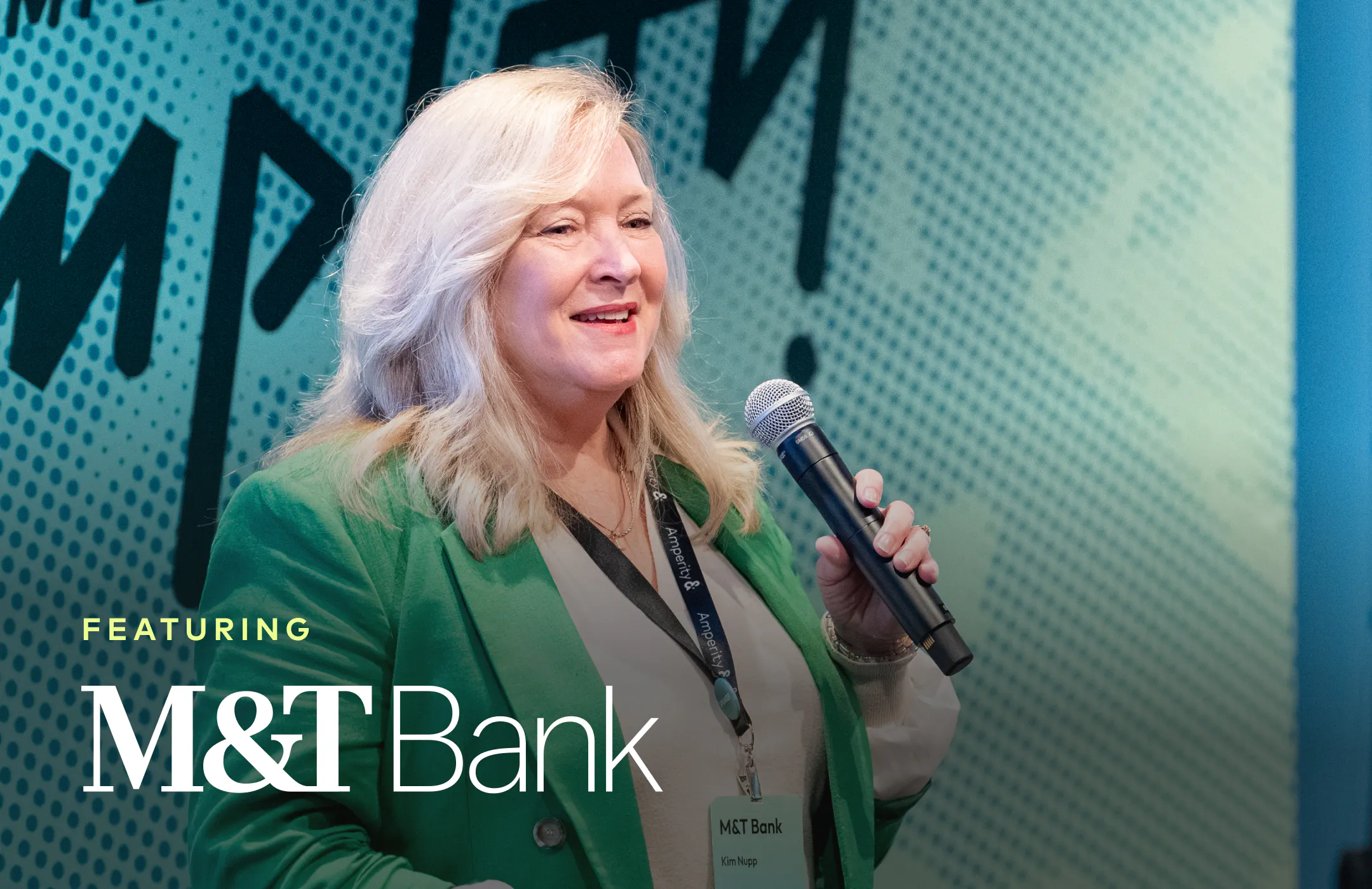
Sarah Pannacciulli, Senior Director of CRM Strategy at Wyndham Hotels & Resorts, Emma Caneva, General Manager of Marketing Digital at JB Hi-Fi, and Devin Kane, Digital Executive at Pepkor, share how leading brands are turning first-party data into a revenue engine through faster activation, smarter decision-making, and new monetization opportunities.
Moderated by Amperity's Amy Perrin, this panel covers the hard-won lessons from three global brands at different stages of their customer data journey, from building the foundation to unlocking net-new revenue streams through retail media and audience monetization.
Top Takeaways
The most expensive mistake is waiting to activate. All three panelists pointed to the same regret: treating customer data as a reporting asset instead of a revenue driver. Once Wyndham, JB Hi-Fi, and Pepkor moved from data collection to activation, the results were immediate. Double-digit lifts in campaign ROI, customers valued at twice what was originally thought, and retail media operations that doubled in profitability within a year.
Technology alone doesn’t drive activation. The brands seeing real results invested equally in building internal alignment across marketing, IT, and leadership. At Wyndham, earning IT's trust with a simple proposition unlocked a partnership that three years later has those same IT leaders attending industry conferences. The data foundation matters, but the organizational foundation matters just as much.
First-party data is a revenue stream, not just a marketing tool. All three panelists are now using their unified customer data to generate revenue beyond their core business. Wyndham is monetizing audience data through ancillary partnerships without adding headcount. Pepkor doubled retail media profitability by combining customer intelligence with predictive models. The message was consistent: your CDP is not a cost center. It's the foundation for your next growth opportunity.
The session was just the start.
See how Amperity helps brands turn customer signals into real-time decisions, measurable growth, and more adaptive customer experiences.
Contact SalesWatch demoFind out where your customer data stands
The Amperity Data Diagnostic maps your customer data against the outcomes that matter most: revenue, retention, and activation, so you can identify gaps and prioritize what to do next.
Get a free diagnostic
Recommended Sessions: Activation & Growth

Video
From Hype to Habit: How Accent Group Operationalised AI
Moving from AI experimentation to enterprise-wide adoption takes more than enthusiasm. Accent Group introduces The AI Operationalization Loop, a six-step framework for turning prompts into playbooks and theory into operational impact. Walk away with a clear, repeatable roadmap to bring back to your organization.
Video
Turn Fragmented Data Into a Customer Lifecycle Engine
When a leading financial institution unified customer data across a complex, multi-system environment, the goal was never just cleaner records. It was faster go-to-market, stronger engagement, and new revenue. Hear how one leader turned data infrastructure into enterprise-scale business outcomes.
Video
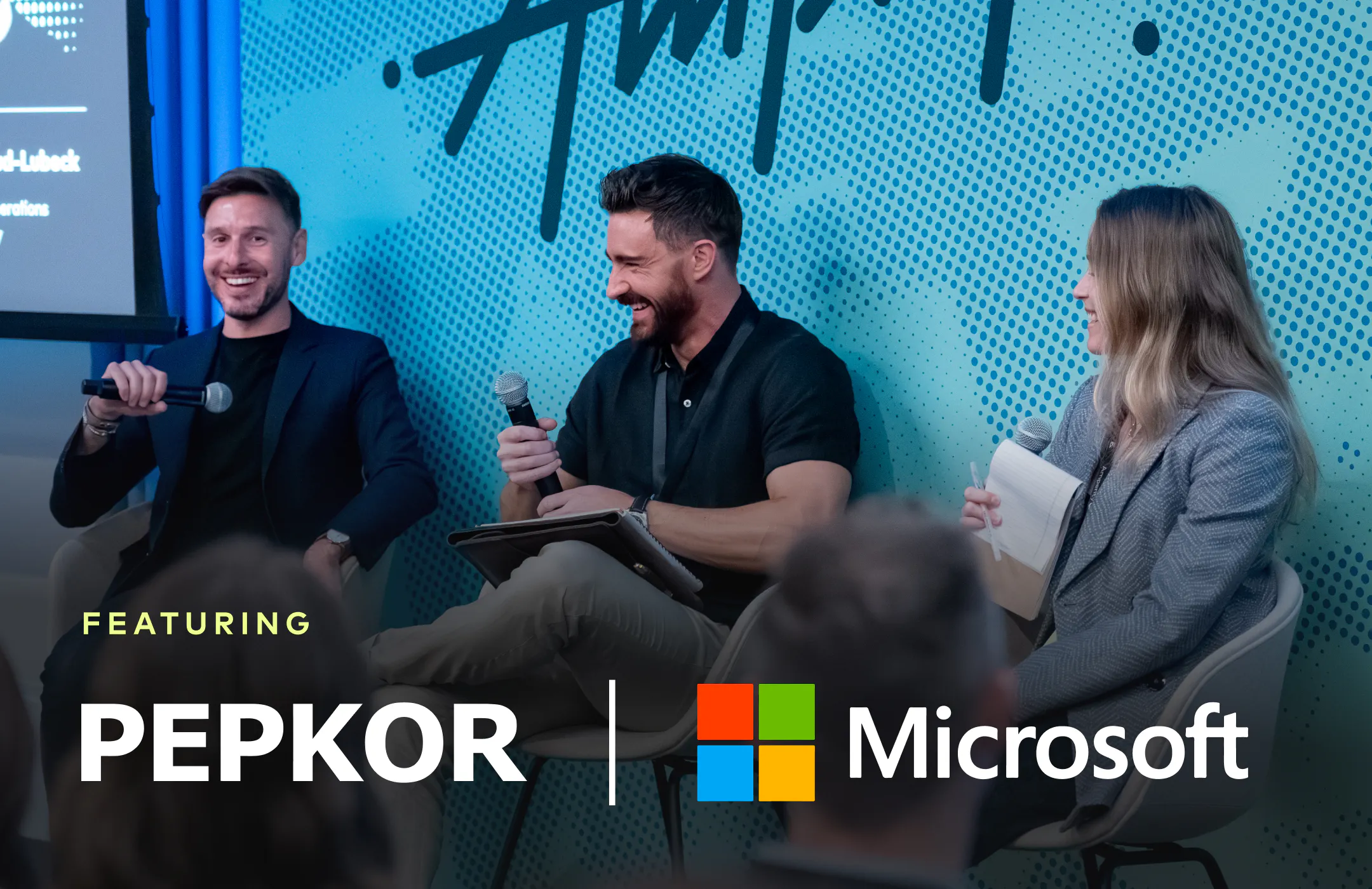
10 Years Toward Agentic: One Journey & What's Next
Pepkor has spent a decade building a data architecture designed to win in one of the most competitive retail markets in the world. Hear their story, followed by a panel with Microsoft on the question every enterprise is asking: are we actually ready for agentic, and what should we be building right now?
Video Transcript
AMY PERRIN: Okay, thanks everyone for joining us. We're going to get started here. Before I introduce my panelists, my name is Amy Perrin. I head up our strategic solutions. And in one sentence, my friends — what's the most expensive mistake you made before you built or refined your data foundation?
SARAH PANNACCIULLI: Our most expensive mistake was only using our customer data for reporting. When we started to use it to activate for actual marketing, we saw double-digit lifts in our ROI on our marketing campaigns — initially in paid media. We saw, leveraging Amperity, a third of the time needed to bring campaigns to market. And all of those campaigns were tremendously more targeted and personalized than they ever were before, and all of that drove tremendous growth for us. But initially we were barely scratching the surface with using any of our customer data.
AMY PERRIN: Emma?
EMMA CANEVA: Similar to Sarah, our most expensive mistake was waiting so long to actually access and leverage our data through the marketing lens. And even though we had to convince the business to invest in a CDP platform like Amperity, we also had to expand our capability in the team and bring on new heads. But I'm pleased to say that that investment more than washes its face.
DEVIN KANE: I'll struggle to be PC with this one. Our most expensive mistake was our entire first CDP implementation. That was done with SAP Marketing Cloud. It was a logical solution at the time — our business is 120 years old, we've been a SAP house for as long as I can remember. It seemed like it would be scalable, modular, it would integrate with our strategy nicely. And we definitely looked at the Gartner quadrants when we were doing that. Twelve months later, we didn't have a functional CDP.
AMY PERRIN: Alright, now that we've spilled the tea, as the kids say, can you all introduce yourselves please?
SARAH PANNACCIULLI: Sure. Sarah Pannacciulli from Wyndham Hotels and Resorts. If you're not familiar, world's largest franchisor, over 8,000 properties across more than 90 countries.
EMMA CANEVA: I am Emma Caneva, general manager of marketing in the digital space, looking after digital marketing, membership, and CRM. I'm at JB Hi-Fi, which is Australia's largest consumer electronics business. Think of it like a Best Buy, but with crazier-looking shops.
DEVIN KANE: Nice. I'm Devin. I come from South Africa. I work for a company called Pepkor. We're a multidisciplinary retailer in Sub-Saharan Africa and South America with six and a half thousand physical stores and a burgeoning online e-commerce and transaction capability.
AMY PERRIN: Perfect. All right, everyone. Now that we see that the data foundation needs to be built no matter where you are in the world, let's learn a little bit more about that. Emma, you discovered that one in five transactions could be tied to a known customer, and once you uncovered that, your customers turned out to be nearly twice as valuable as originally thought. Can you walk us through that moment of realization?
EMMA CANEVA: Absolutely. Our transactional data was sitting in IT and engineering silos. Online, in-store, and phone sales were all separate, and they each had individual IDs per transaction with no concept of customer identity. So before we could even contemplate accessing and using a CDP platform like Amperity, we actually spent a number of months harmonizing our data in a Snowflake instance, and then we plumbed that into Amperity, and we were able to recognize that single view of customer — unlocking that one in five transactions being attributed to a customer — which then allowed us to navigate into our personalization goals of attach communications, upgrade communications, ecosystem communications, and RFM. The three key insights were: the customers with our messiest data are actually our most valuable customers. They shop across channel, they shop across category, they have more than one email address, more than one mobile number, and more than one address for delivery purposes. The second thing we unlocked was that our most valuable customers were actually twice the value we thought, which is really important for us to know. And the third thing we unlocked was not only this concept of a single customer view, but we extrapolated that out to a household view. Understanding the value of a household, brand affinity, category affinity, and what the shape of that household looks like is also really important for us in delivering on those personalization goals.
AMY PERRIN: And we hear this so often — it's so much more than co-location or just getting the data together. That unification piece is really the unlock. What we find is that understanding how much your customers are actually valued, understanding where they actually are in their lifecycle journey — those are the pieces that really matter as you think about when, where, how, and what message you're sending to your customers. So unification is really the foundation. We know that it also takes alignment across your teams. Sarah, working at a company like Wyndham where your teams have different systems and different priorities, can you share a bit about how you built internal buy-in, and once you had it, what's an example of something that unlocked for the business?
SARAH PANNACCIULLI: Yeah, so we had a little different start. Our data also was in transactional silos owned by our more traditional data and IT teams. And instead of harmonizing anything before we started with Amperity, we simply went to IT and said, can you just feed the most important data into this CDP that us marketers have discovered and feel like we really need? And then we'll leave you alone. Automate the data, send it over. The CDP will do the identity resolution for marketing needs. Don't worry, we're not going to change anything on the business side or the financial side, and then we'll leave you alone. That was the initial sell for Amperity: we'll stop having so many requests and needs for data. And they said, great — we'll embark on this single project.
SARAH PANNACCIULLI: You get your data, you go do your thing, and leave us alone. So that's how we began. And then we moved into a place of really starting to activate and use the data, and sharing those wins. You kind of have to go on a bit of a PR campaign and build those relationships by showing the rest of the organization: here are the opportunities, here's what we're starting to unlock. We're at a space now where we have an amazing relationship with our data team — there are several of them here today, which three years ago at a conference like this, they wouldn't have even considered coming. So it takes some time, but there is an evolution. One of the big unlocks for us as a hotel loyalty company — member rewards are very common.
SARAH PANNACCIULLI: We have a lot of information about our members, and in third-party black boxes we had done some work in targeting and personalizing for our members. But having all of the data — literally all of the data, members and non-members together in one place — it really allowed us to unlock new marketing opportunities for our non-members. It was a complete segment of our guests that we never did anything with beyond basic batch and blast. And now we could start to mine those people to discover who's going to become a member and who likely never will, and that's okay — so we stopped asking them to. So it was a journey for sure.
AMY PERRIN: And I think that alignment piece is so big in moving to activation. To make this successful, the foundation is really about unifying your data, it's about aligning your teams, and then you unlock activation. It brings us right back to the initial most expensive problem that we wish we'd solved sooner: moving to activation faster. Devin, speaking of unlocks for the business on that activation side, can you give us one use case that you can do today that wasn't possible 18 months ago?
DEVIN KANE: There are so many of them. If you ask me next week I might give you a different answer, but right now the one I'm most excited about is the fact that we're able to monetize the outputs of the predictive models that we're running in Amperity. These are models we built internally for our own use — they predict things like churn, loyalty, life stages, and competitor purchases from our customers. But we're now able to commercialize these and make them accessible to our retail media customers, and that's really exciting for us. That definitely wouldn't have happened 18 months ago. It's allowing for early targeting of these customers, and it's allowing us to track the behavioral changes that are actually happening as a result of our advertising. We're realizing commercial value from it, but it's not just about squeezing our retail media clients — it's about unlocking value for our customers with more personalized, targeted advertising, unlocking value for the client with increased sales, and generating an additional income stream for us as a business in the form of retail media sales.
AMY PERRIN: That's great. I love that we start with brand marketing and then find new avenues for revenue. There's a lot of opportunity both internally and in using that unified data across partners. Emma, coming back to you — one of the big unlocks for JB Hi-Fi relates to attach campaigns. Walk us through your approach, because the timing mechanisms here are actually very sophisticated and thoughtful. We'd love to learn a bit more about how Amperity lets you know when to send that accessory email — not just who to send it to.
EMMA CANEVA: In our business, we have a philosophy of not just selling the customer the primary product they've come into a store for — we want to sell them a solution to make sure that primary product is a better experience for them. Think about buying a TV. We'll assess if a customer has purchased, at the same time, complementary attached products like a wall mounting bracket, a soundbar, cords or cables they might need, or even an installation service. If they've already done that job, we figure we've probably squeezed that lemon as much as we can, so let's not put them in the bucket for an attach communication. But then we also look at when the customer actually had their TV in their home. Did they buy a smaller unit like a 55-inch and walk out with it in the back of their ute, or did they get it delivered? Was it a delayed delivery because the product wasn't in stock? Or did they order an installation service, which is sometimes a double-knock facility post-delivery? We use that timing infrastructure to make sure that the attach communication is sent at the most timely and relevant moment for that customer. Being able to have that timeliness and relevancy is unlocking incremental sales for the business that wouldn't have occurred otherwise, while also giving the customer the best solution they can have.
SARAH PANNACCIULLI: We don't call them attach campaigns — a lot of times on the travel side in the US we'll call them upsell campaigns. But I find those customer service communications so valuable. It's the worst to get home with your equipment and realize you forgot a cord. On the travel side, we think of this in two different parts of your journey lifecycle. Several days before your stay, we have pre-stay communications — you can use your rewards points for partnerships to enhance that trip with experiences, you can earn points through those experiences through some of our partnerships, and we also remind people about the benefits they get on property at their loyalty level. So we're deepening that engagement with those members and guests.
SARAH PANNACCIULLI: We also have a concept of: you're just about to arrive — do you want to prepay for early check-in or a late checkout? Those are all the upsell concepts, and we make sure to attach those to the profile in Amperity so they're enriching it, so that the next communication is just that much smarter. We know you always pay the extra pet fee, so we promote pet-friendly hotels and encourage you to stay at all of our hotels wherever your destination is. We use not only the trigger to get you to purchase more, but we also enhance your profile so that we're having more personalized, smarter communications in the future.
AMY PERRIN: It is interesting — electronics and hospitality are big-ticket items that maybe aren't purchased as frequently as jeans or shoes. Emma, can you go a little bit deeper on frequency and how you've been using Amperity to understand when is the best time to reach out and increase that frequency of purchase?
EMMA CANEVA: Sure. In consumer electronics, the frequency data that you might get in FMCG or even apparel just isn't there. So we have to use longitudinal data to understand when a customer might be in market to upgrade a TV, a mobile phone, a laptop. We use that multi-year purchase history — which we have in Amperity — to determine when we can maybe bring that upgrade cycle forward in a sweet spot, and then we partner with our brands to have exclusive incentives as part of that. By leveraging that purchase history, we can also layer on, through Amperity real-time tables, recent web browsing behavior — so we can align that history along with active intent as an additional layer for relevant audiences, not only to inject the right information into an email channel, but also to plumb that into Meta and Google to provide a more cross-channel experience for upgrade. Again, that's getting to the customer at the right time in the right place, which unlocks incremental sales that we wouldn't have garnered before.
AMY PERRIN: It's so much more than identity and just unifying data. It's ensuring that we have the right behavioral signals so that we can reach out to customers at the right time with the right message. Bringing that all into Amperity really powers those experiences across channels. We've talked about RMN, we've talked about owned channels — Sarah, I'm going to look back at you. We have so many amazing case studies about the work that Wyndham has done in paid channels. You went from static audience segments to hundreds of dynamic paid media audiences. With that increase in speed, how did that change how you spend and how did you prove ROI?
SARAH PANNACCIULLI: Yeah, so we have much more targeted paid media audiences now and we're working towards connecting what we're doing in the paid media channels with the owned channels. If those conversations with your guests are disconnected, there are opportunities for message collisions, or you're losing the trust of your guest. So we have a longstanding paid media activation with Amperity and are now thinking through the rest of that marketing ecosystem and our MarTech stack — how do we ensure that that conversation is cohesive no matter where a guest is across their lifecycle or which technology they're interacting with? Because all of that is agnostic to the guest.
AMY PERRIN: Yeah, absolutely. Alright, switching gears slightly — I want to go back to net new revenue streams, because I think that's a new opportunity that people are exploring. Quick show of hands in the room, if you're brave: how many of you, when you started your digital transformation journey, thought about net new revenue streams and how you could use your first-party data to create revenue beyond your brand?
AMY PERRIN: It's relatively new, right? It's definitely the next frontier. Sarah, coming back to you — we know that you're on that journey with Wyndham now. When you look at data monetization opportunities, a lot of people will think media networks, and media networks — much like credit cards or partnerships — take teams and a lot of resources to stand up. So what's Wyndham doing today? You're taking a different approach where you're really able to expand your revenue business without adding additional headcount.
SARAH PANNACCIULLI: Yeah, so we do not have a retail media network team — that doesn't exist at Wyndham. But leadership is starting to understand the value of our guest data, not just for activating on marketing, but also the value in the larger ecosystem. So we have what we call an ancillary revenue team. They're very partnership-focused, and the ancillary revenue idea is essentially reselling our data for other paid media folks who want to reach our audiences. The ancillary revenue team has developed partnerships in that ecosystem and knows the partnership realm very well. My team knows the data really well. Our two teams have come together to discover a new superpower in the organization — we bring those teams together and leverage some of the newer tools within Amperity, letting the technology do the heavy lifting, and we can realize the value of that data without expanding the team tremendously. A partnership of people and technology is what's helped us bring that to life in a meaningful way for the organization.
AMY PERRIN: And you're doing that across a public marketplace, right?
SARAH PANNACCIULLI: Yes. Right.
AMY PERRIN: So you don't necessarily need the team — you're able to send your data and have access to partners. That's incredible. You're able to just leverage the headcount that you have.
SARAH PANNACCIULLI: Yep, exactly.
AMY PERRIN: Devin, I want to come back to you on the media network side, because if you have a team in place, unified data can really make a difference. We know that there's a massive upside in retail media networks — they're very high-margin businesses — but many retailers and commerce brands are still figuring out how to compete, especially against massive media networks like Walmart or Amazon. Where is Pepkor in this journey, and what does having a strong first-party data foundation actually change about the opportunity?
DEVIN KANE: We were established in this space long before I came along — we'd been running retail media for decades, across multiple different departments, with a team established. But we got to a point where it was tapering off in terms of its value to the business. After our initial case studies came out with Amperity, certain key drivers — customer data, real-time analytics, and digital innovation — were seen by the business as the biggest drivers in retail media expansion going forward. So that retail media team moved into my structure, which is a digital, data, and analytics structure, to scale and grow going forward. Now, we operate in a highly competitive market. Our retail media customers are international brands that often have a set budget for our region. So if we want to grow, we have to take market share from our competitors, and we can only do that by offering better solutions than they do. Sales is always going to be an important driver when it comes to getting retail media budget from one of your vendors, but there's another aspect that can be unlocked — and that's providing leading-edge tech and innovation to them. That's where they see the potential for future growth of their brands in your market. Our retail media operations, I'm proud to say, have doubled in profitability in the last year as a result of this new focus on digital tech and innovation as a selling tool for customer data.
AMY PERRIN: That's great. Unifying your data allows better targeting and enables attribution for online and offline sales — it's providing that full feedback loop so you can be successful in a highly competitive but high-margin area. Love hearing the success that Pepkor has had. All right. We have a lot of folks in different parts of their journey in the room. My last question for our panelists is: for someone who is 12 months behind you — not necessarily starting out, maybe a bit further along in the journey with Amperity — what's one thing you recommend they do and why? Emma, do you want to kick us off?
EMMA CANEVA: I'm going to sing from the same book as Laurie did earlier today, and I would always advocate for a really strong framework that firstly aligns your use cases across your stakeholder set, even collaboratively. And then focus on high-impact use cases to get to market really quickly, and then scale and optimize over time. For us it was attach, upgrade, ecosystem, and RFM — and that might be different in all of your businesses — but I think the key takeout is: in market and 80% perfect is way more powerful than waiting for 100% perfection, which is never going to happen.
AMY PERRIN: Yeah, fail fast, right? Fail fast to learn fast. Devin?
DEVIN KANE: Your CDP implementation is so much more than just retail media, but we've touched on that today in this panel so that's what I'd like to focus on. I think a lot of businesses are not aware of the opportunity that's present from a commercial and scale perspective in terms of their customer data. So I would encourage you — if you're wondering about retail media — to sit down with a prospective vendor or client, run a workshop with them, understand their business, their market share, and their strategy for the future. Take that data back and overlay it with the customer data that you have in your organization so that you can identify potential opportunities for them in collaboration around retail media. Once you've got their response from that — and I really do think it will be a positive one that will surprise you — take that response back to the business and use it to make the case for the investment or focus you need on your CDP and your customer data strategy. This is not a cost center. It's the foundation of the strategic implementations you'll do in the future, and it also represents an additional profit incentive in the form of retail media.
AMY PERRIN: I love that. It really comes back to this idea that unification is the foundation, and alignment is that second piece that can enable faster activation — not necessarily just for your brand, but also on the monetization side. It kind of brings us right back to the beginning. Sarah, do you want to close this out?
SARAH PANNACCIULLI: Sure. Very similar advice to Emma's — I think you start with your use cases. Having really tight use cases is critically important, and also making sure those use cases are very understandable and digestible by everybody throughout the organization. They should align to your business and be solving for problems that are familiar to everyone. If you get really techy and data-nerdy, you'll lose the room. You need to be able to sell the use case and make it very tangible to the problems that the entire business is solving for. The other part to include in that business case is why you're blocked, or what this will unlock. Yes, I will be able to do this — but here's why I can't do it today. If I were to do it today, it would be subpar, or take a ton of resources, or the juice wouldn't be worth the squeeze. Having a really strong use case is super important. And then you build from there — there's the use case you sell to get it over the finish line or get the investment, but as marketers we'll typically have a hundred more use cases. So get one in market quickly, sell those wins, and don't wait for perfection. That is probably the number one advice in life.
AMY PERRIN: In life. I love that. This is probably not surprising to anyone in terms of what we need to do, but there's so much that can be unlocked. Coming back to building that business case, ensuring that you are thinking about the ROI, and really articulating the problems, the gaps, and the unlocks so that you can move quickly — that's what's going to make the difference. It's about ensuring that you have alignment and an ROI story that you can tell, so you can start and expand. We all get a little overwhelmed with giant projects, and the key is breaking them down so that you can actually start to move the needle. I just want to take a moment and thank our panelists for their time and everything that they've shared. We are going to have another presentation right after this one, so take a few minutes, ask us questions, converse among yourselves — and know that it will get started right away. Thank you.