
- AI
- AI Analytics
- Amperity
- Analytics
- Category: Activation
- Category: Data readiness
- Category: Optimization
- CDP Comparison
- Cloud Solutions
- Customer 360
- Customer Data Cloud
- Customer Intelligence
- Customer Lifetime Value
- Customer Spotlight
- Data Foundation
- Data Warehouse
- Digital Transformation
- First-Party Data
- Identity Resolution
- Intellectual Property
- IT
- Loyalty
- Marketing
- Paid Media
- Partnerships
- Personalization
- Privacy & Data Governance
- Product Release
- Real-Time Data
- ROAS
- Third-party Cookies
blog
Jul 13, 2026
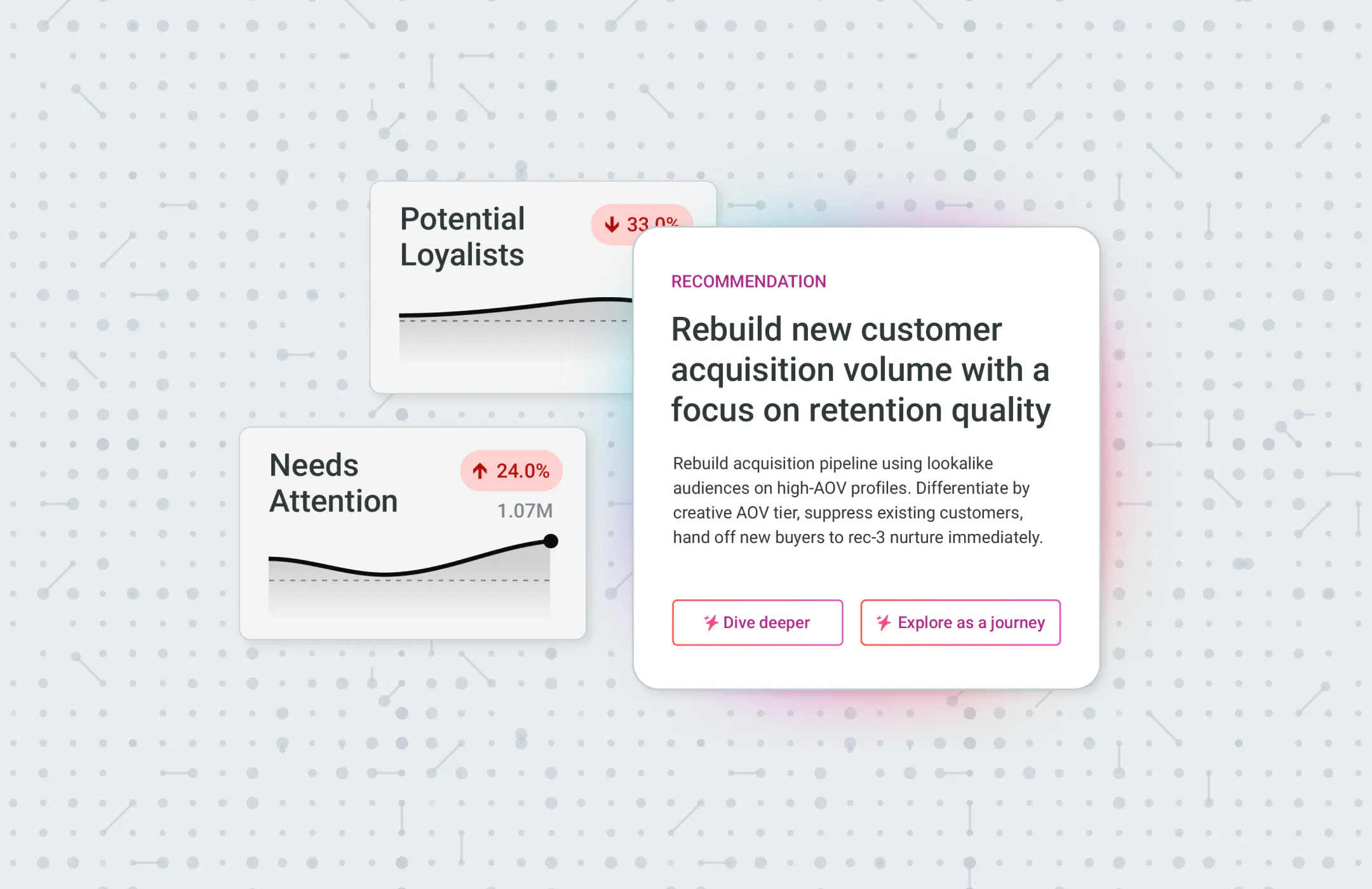
AI Recommended Actions for Retail Marketers
Retail marketers get plenty of AI agents promising smart recommendations, but few are built on customer data trustworthy enough to act on.

blog
Jul 13, 2026
Amperity MCP Server for Customer Data: Connecting AI Frameworks and Martech Platforms To Your Unified Profile
An MCP server is only as useful as the customer data it exposes, and unified profiles reduce the risk of confidently wrong AI output. Now generally available.

blog
Jul 2, 2026
What Is an Identity Graph? Definition, Types, and How They Work
The data structure that connects fragmented customer records to real people, and the structural reason one graph often isn't enough.

blog
Jun 29, 2026
Why the IDC MarketScape named Amperity a Leader in the 2026 AI-Enabled CDPs for B2C Users 2026 Vendor Assessment
We believe Identity Resolution is the foundation for AI-grounded decisioning, and the criteria for evaluating a CDP have moved with it.

blog
Jun 11, 2026
Before You Can Have an AI Marketing Strategy, You Need a Customer Intelligence Strategy
Everyone wants to talk about AI agents, autonomous marketing, and orchestration. But new research from Scott Brinker suggests the biggest barriers to AI adoption are not actually about AI at all.

blog
Jun 1, 2026
Why we brought customer intelligence to your lakehouse
Your lakehouse stores everything, but it still doesn't know your customers. Here's why we built Amperity to run inside your Databricks environment.

blog
May 28, 2026
Retail Customer Experience Is Only as Good as Your Customer Intelligence
How retail leaders close the gap between customer signal and business response, before AI scales the problem further.

blog
May 26, 2026
Why Customer Loyalty Programs Fail Without Context
The brands winning loyalty today aren't the ones with the most touchpoints. They're the ones acting on customer context in real time.

blog
May 20, 2026
The Missing Category on Every CDP Roadmap: Return on Customer Data™
Most enterprises can't tell you if their customer data is actually paying them back. Return on Customer Data is the framework that finally provides an answer.

blog
May 19, 2026
What I Heard at Amplify 2026: The Brands Winning Are Built for the Moment
Leaders from the NFL, Wyndham Hotels & Resorts, JB Hi-Fi, Accent Group, M&T Bank, Books-A-Million, and more on what's actually working right now.

blog
May 18, 2026
The Publicis - LiveRamp Deal Signals a Much Bigger Shift in the Industry
Publicis’ acquisition of LiveRamp signals a bigger shift: in the AI era, customer identity and intelligence infrastructure are becoming strategic enterprise control points.

blog
May 12, 2026
Why the Standard CDP RFP Misses What Matters for Retail
Most CDP evaluation frameworks were built for generic use cases. Retail buyers need questions that test identity across in-store and online channels, AI readiness, and retail media audience quality.