Product Updates
See what Amperity can help you do next.
Pér: Your AI Agent for Customer Data
Turn to Pér for answers grounded in trusted customer context. Pér learns how your business works, recommends next steps, and helps you act across your connected stack, with human approval before taking action. Try the interactive demo.
Understand business trends with Signal
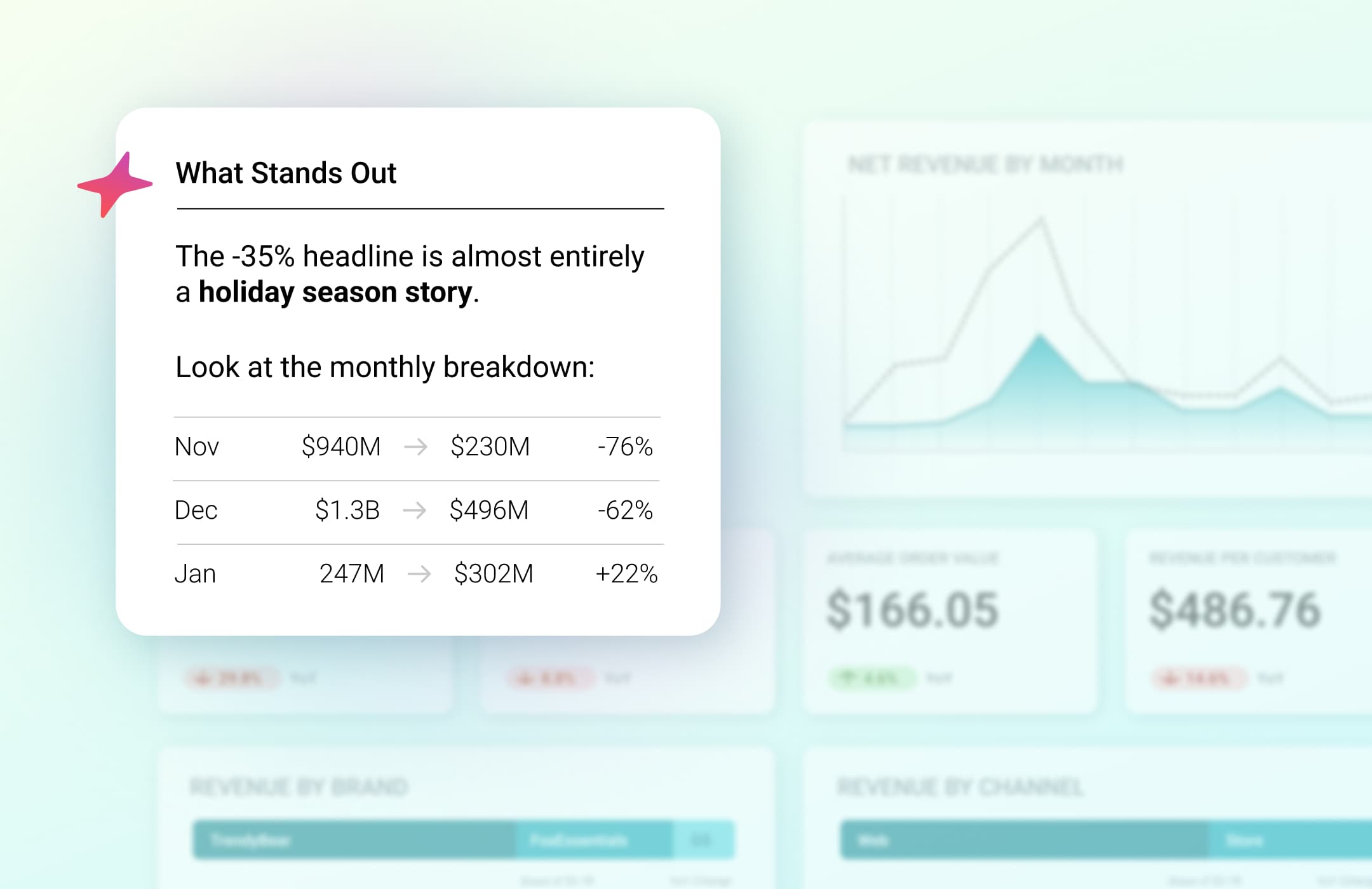
Track revenue, purchases, average order value, and other configured metrics inside Amperity. Signal connects business trends to customer context, while the AI Assistant lets you investigate the chart you are viewing with its filters and time period in context. Available to all customers in preview.
Amperity MCP works with Claude & ChatGPT
Find Amperity where your teams already use AI. Amperity is now listed in the Claude and ChatGPT marketplaces, making it easier to bring trusted customer context into supported AI workflows using your existing Amperity permissions.

OpenAI Ads connector
Activate unified first-party audiences in OpenAI Ads for eligible ChatGPT campaigns. The connector creates or updates OpenAI custom audiences as membership changes in Amperity, helping paid media teams extend targeting and suppression strategies to a new channel.

Interactive charts in the AI Assistant
Explore customer data visually without leaving your AI Assistant conversation. Display multiple charts, switch visualization types, focus on specific results, expand or export charts, and use suggested follow-up questions to investigate what stands out.

Build real-time workflows with our MCP
Configure and validate real-time use cases through natural-language prompts. Expanded MCP tools help you build event streams, profiles, segments, and destinations, then confirm that profiles update and deliveries reach their destination.

Real-Time Journey Travel Log
Understand how customers move through real-time journeys. Journey Travel Log records stage transitions and split paths, including control groups, supports exports for deeper analysis, and makes journey participation available for segmentation, suppression, and follow-up engagement.
Real-Time Profile Viewer
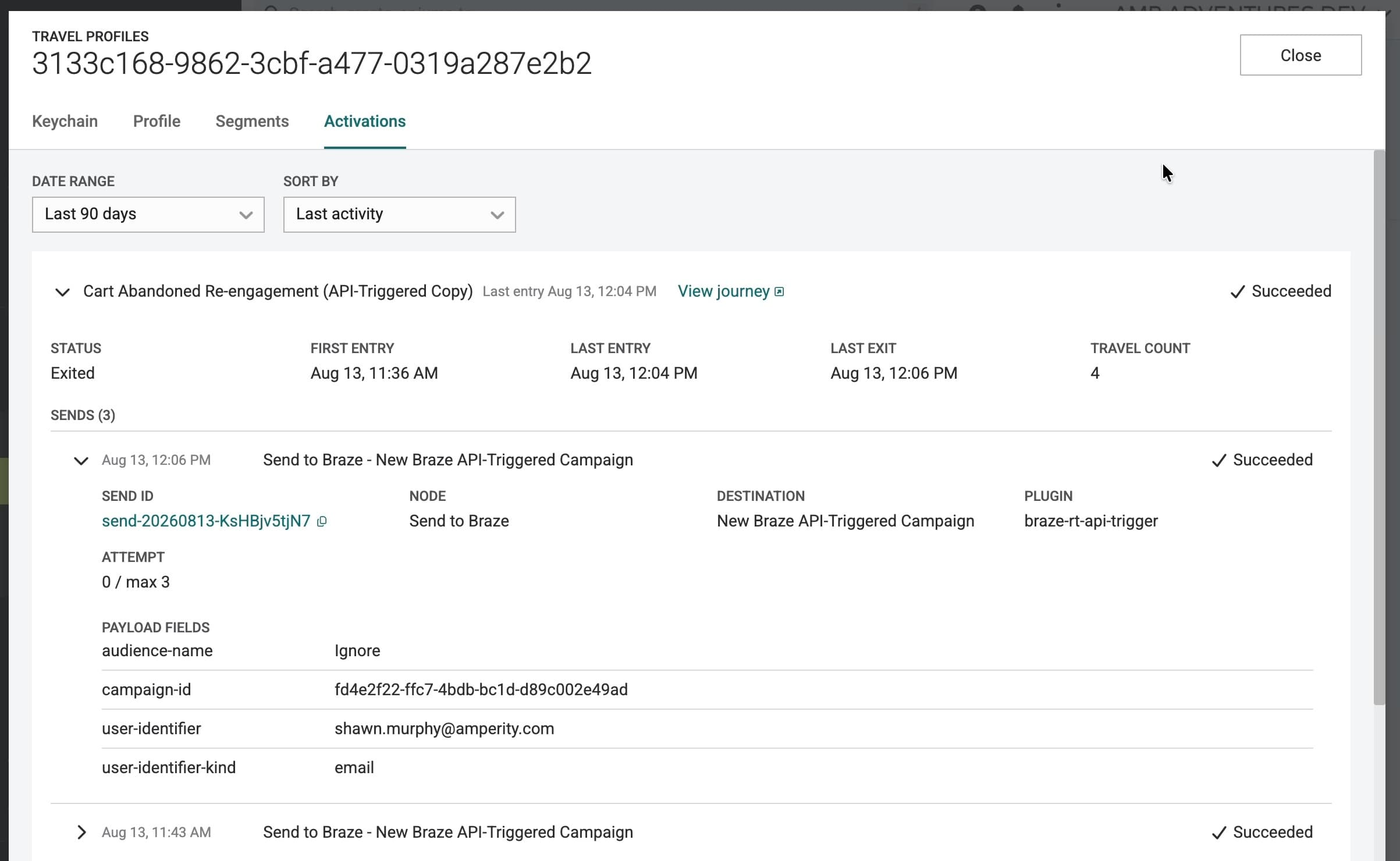
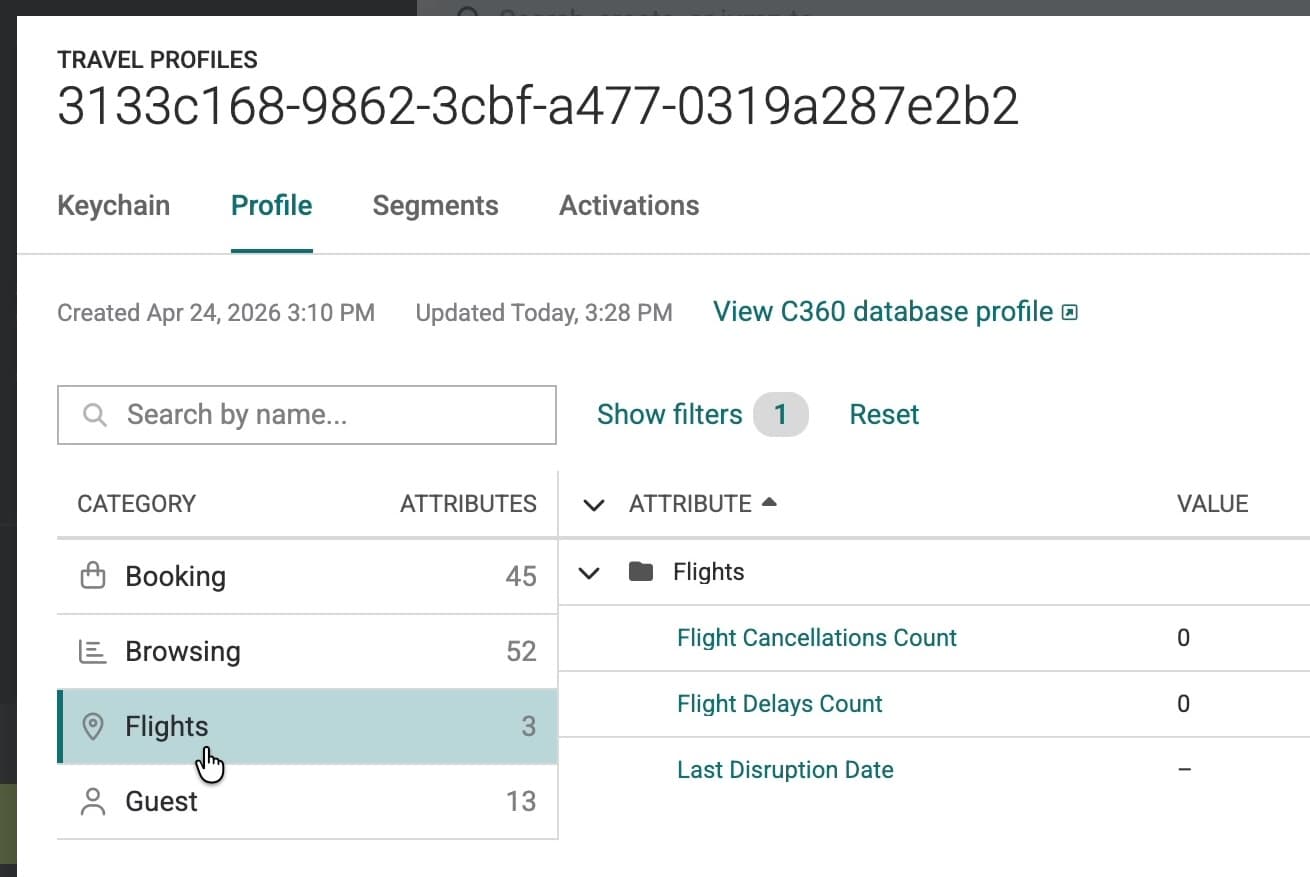
See what Amperity knows about a customer right now without decoding JSON. The Real-Time Profile Viewer brings grouped profile attributes, identity keys, segment membership, related journeys, and activation history into one shareable view for faster investigation.
Real-Time Segment Improvements
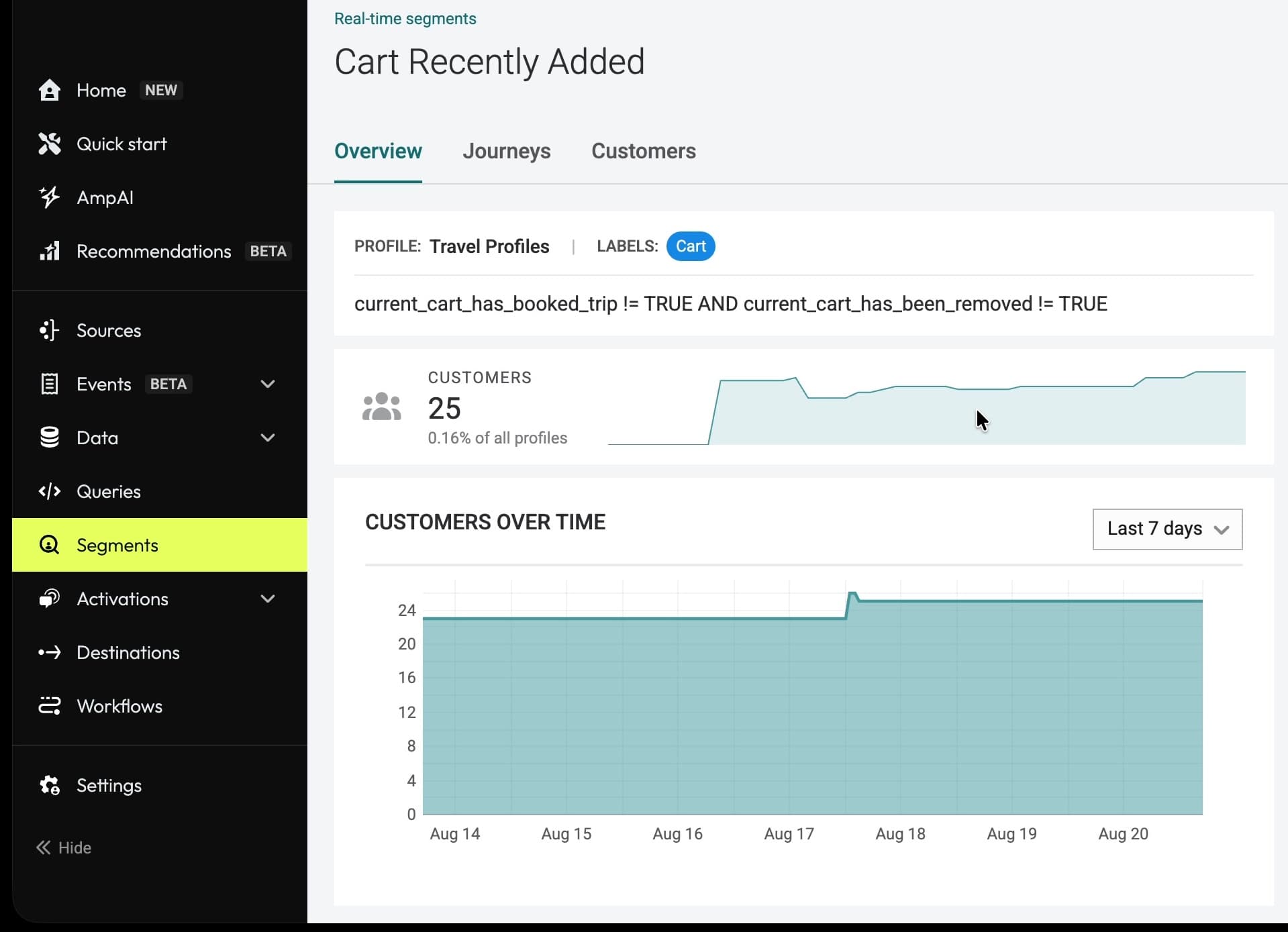
Find, organize, and evaluate real-time segments from a dedicated workspace. Use folders and labels to keep audiences manageable, review current membership and historical trends, see which journeys use each segment, and inspect the customers who qualify.
Build Journeys with Amperity MCP Server
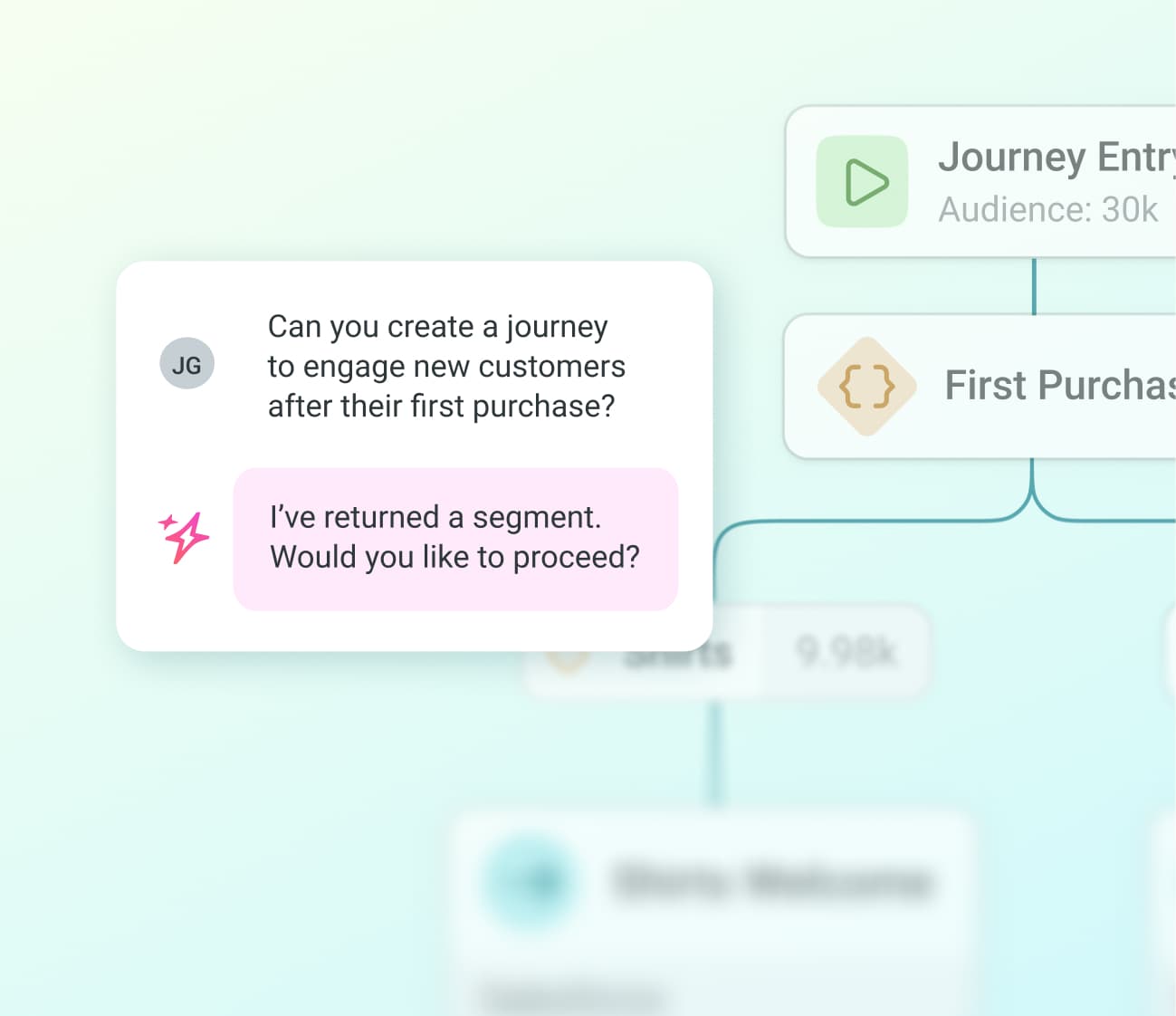
Turn ideas into complete, saved Amperity Journeys from MCP-compatible clients. Create or update every step, decision point, connection, and destination in one operation, then schedule or run the journey with existing permissions, review steps, and send confirmations.
Expanding Conversion & Event APIs
Send stronger first-party signals to improve bidding and measure ROAS more accurately. Amperity delivers conversion, offline, purchase, and real-time events to 15+ destinations, including Snapchat, Microsoft Advertising, Amazon Ads, Emarsys, Braze, and Roku.

Event Propensity Model
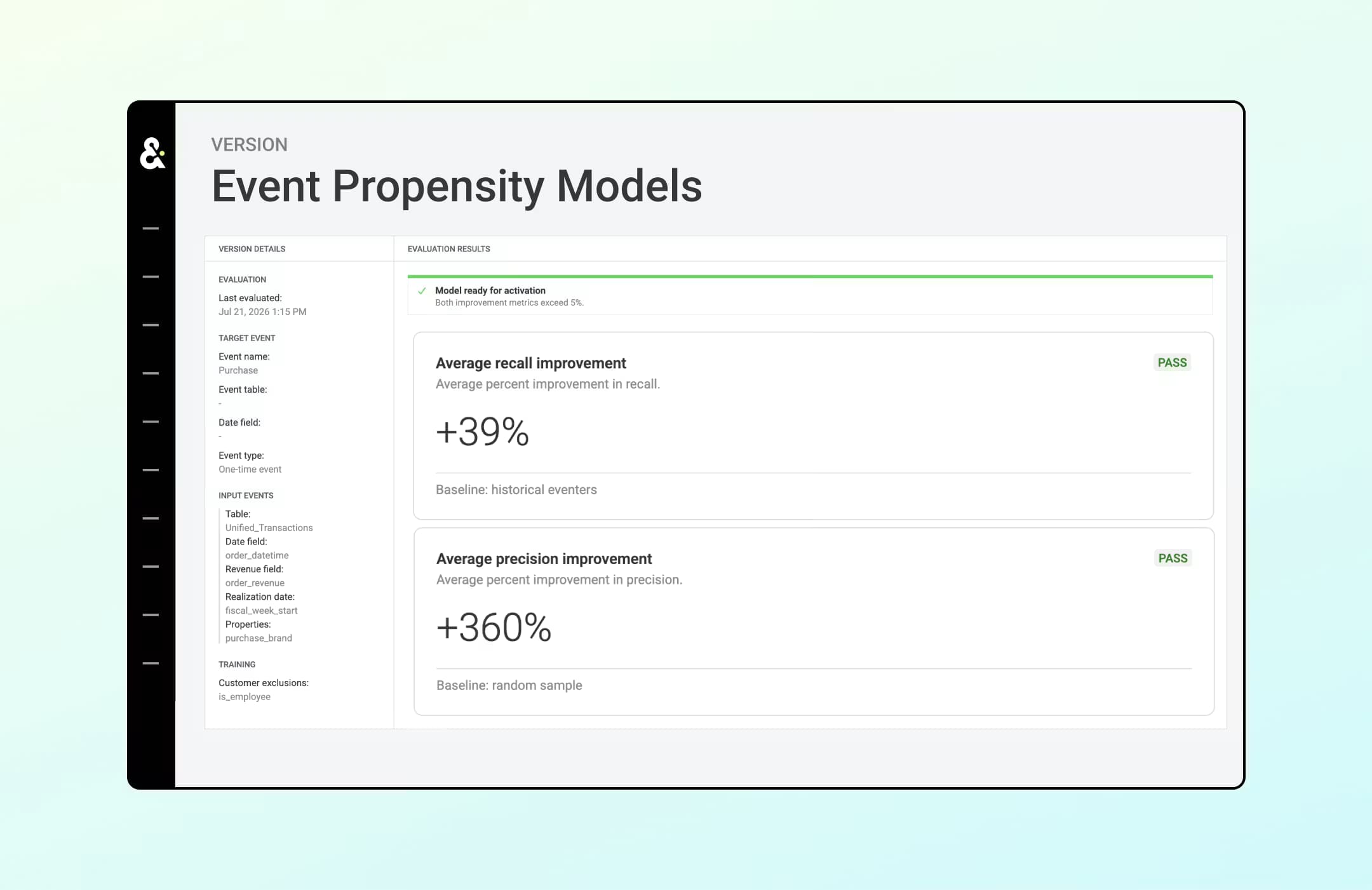
Focus campaigns on the customers most likely to act. The Event Propensity Model predicts each customer’s likelihood of completing a target event within the next 30 days, then ranks customers and recommends audience sizes to support campaign planning.
Recommended Actions
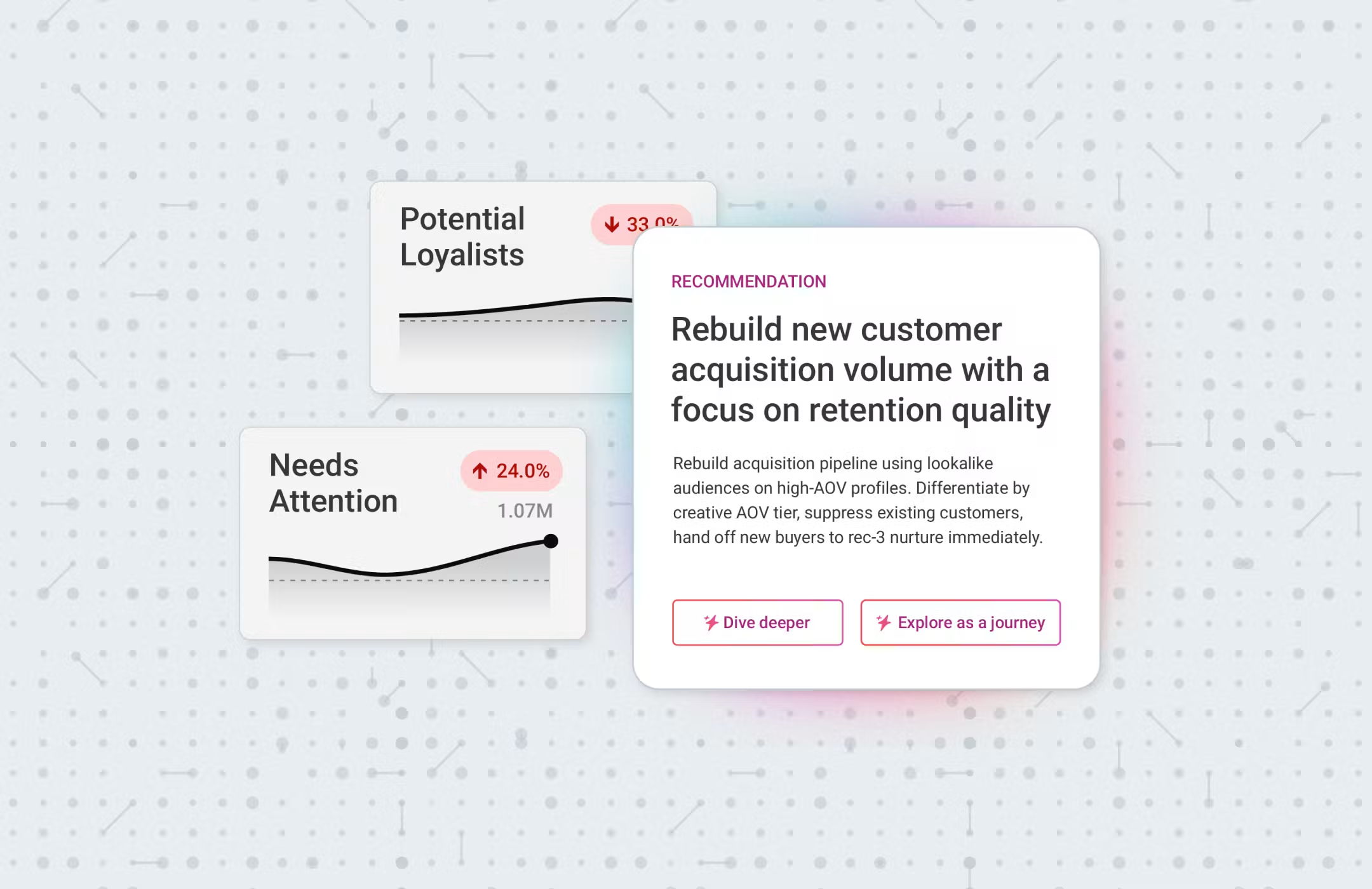
Turn unified customer data into clear marketing opportunities. Recommended Actions prioritizes marketing plays based on opportunity, target segment, and expected business impact, helping teams decide where to act next.
Paid Media Measurement & Optimization
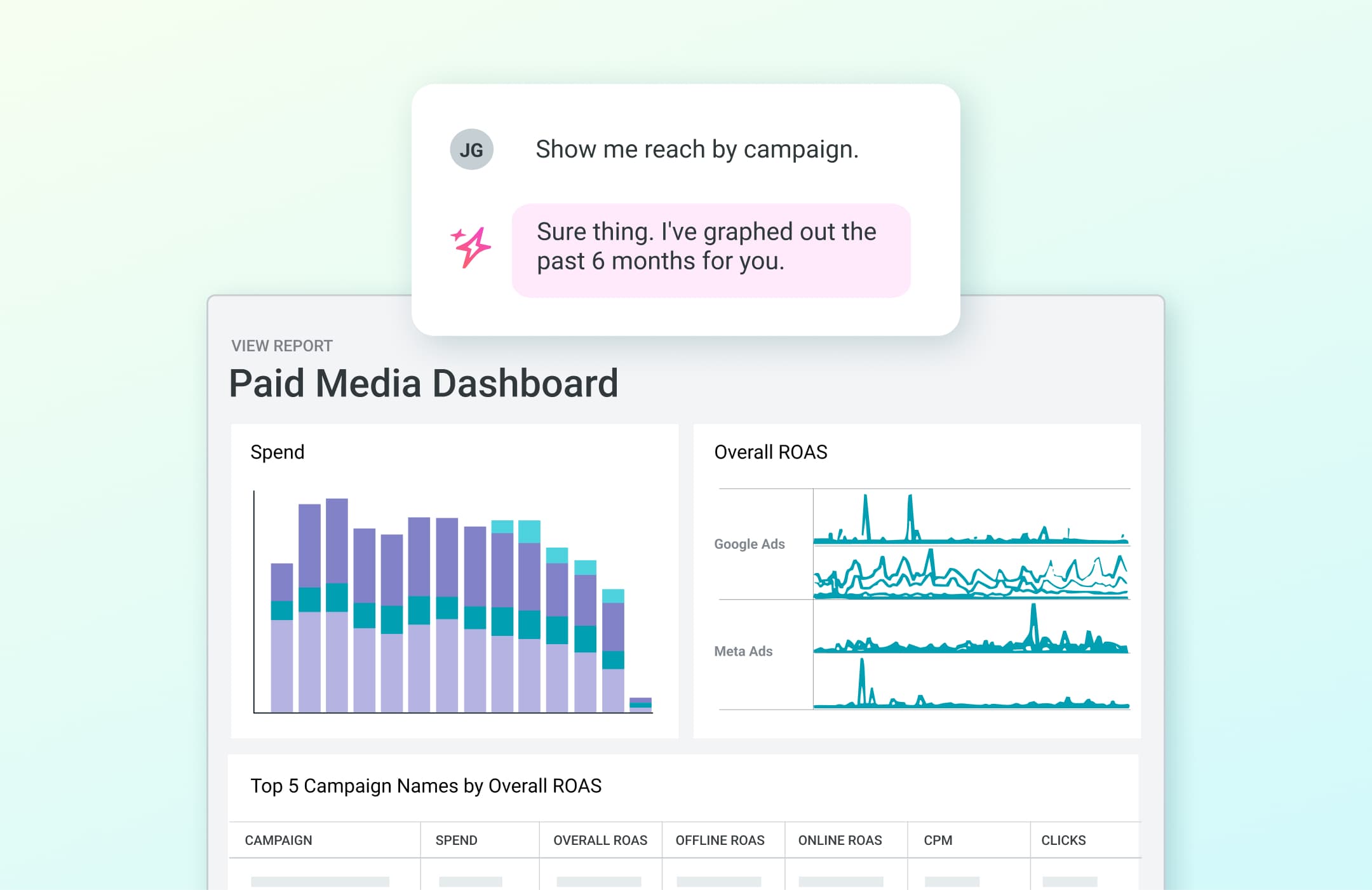
Understand paid media performance alongside your customer data. Bring Meta and Google performance data into Amperity, then use the AI Assistant to compare campaigns and analyze metrics such as return on ad spend, acquisition cost, and click-through rate.
Amperity MCP server
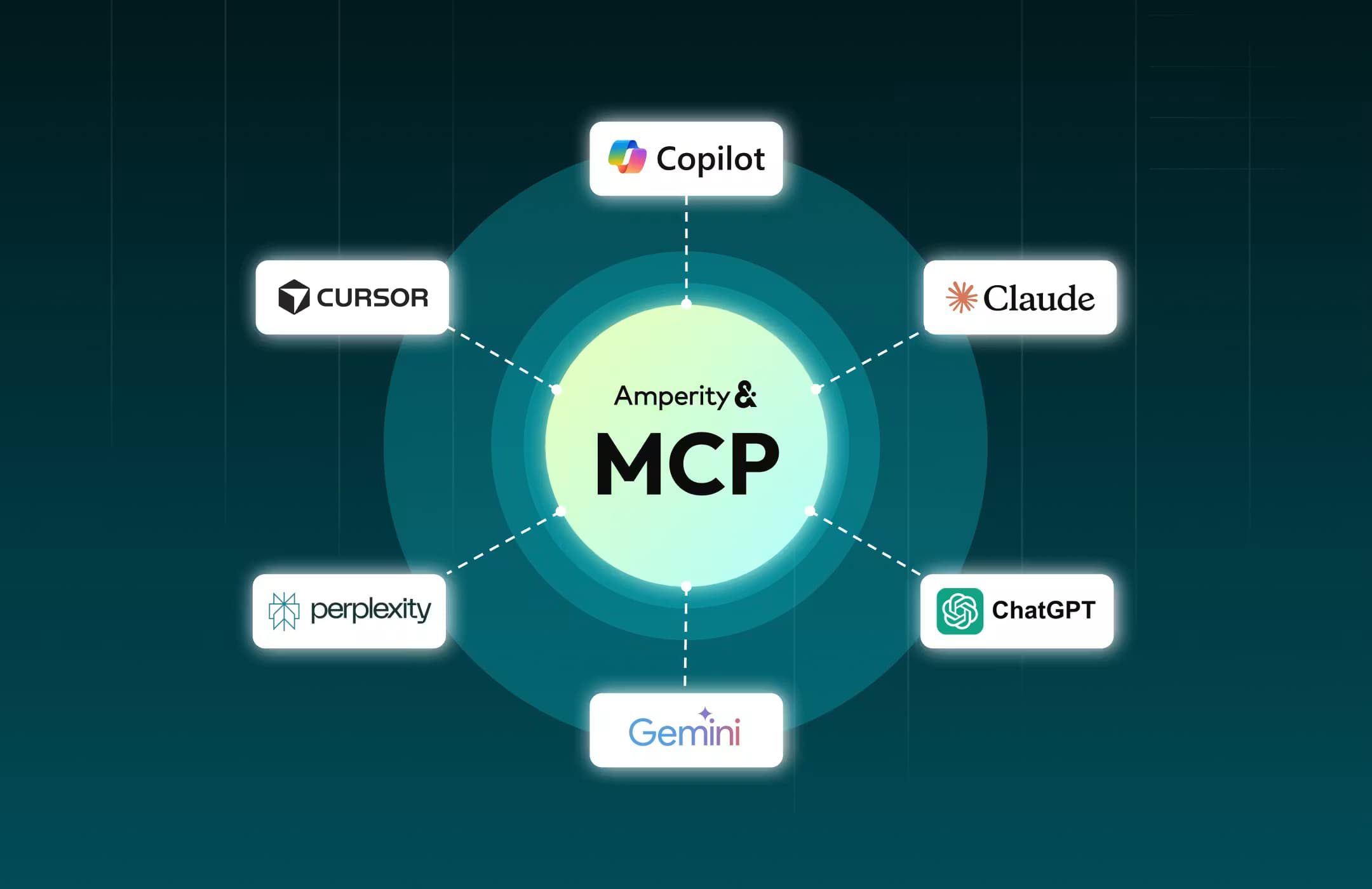
Explore insights and take action on customer data using natural language in an AI assistant. Connect an MCP-compatible client (including Copilot, Claude, or ChatGPT) to your Amperity tenant. The hosted, multi-user Amperity MCP server is now generally available with OAuth authentication, an expanded tool set, and improved reliability.
Bring Your Own Compute for Databricks
Run customer intelligence workloads in your Databricks environment while keeping customer data within your existing governance boundary. Bring Your Own Compute for Databricks is available in public preview for eligible prospects and new customers.

Amperity Home
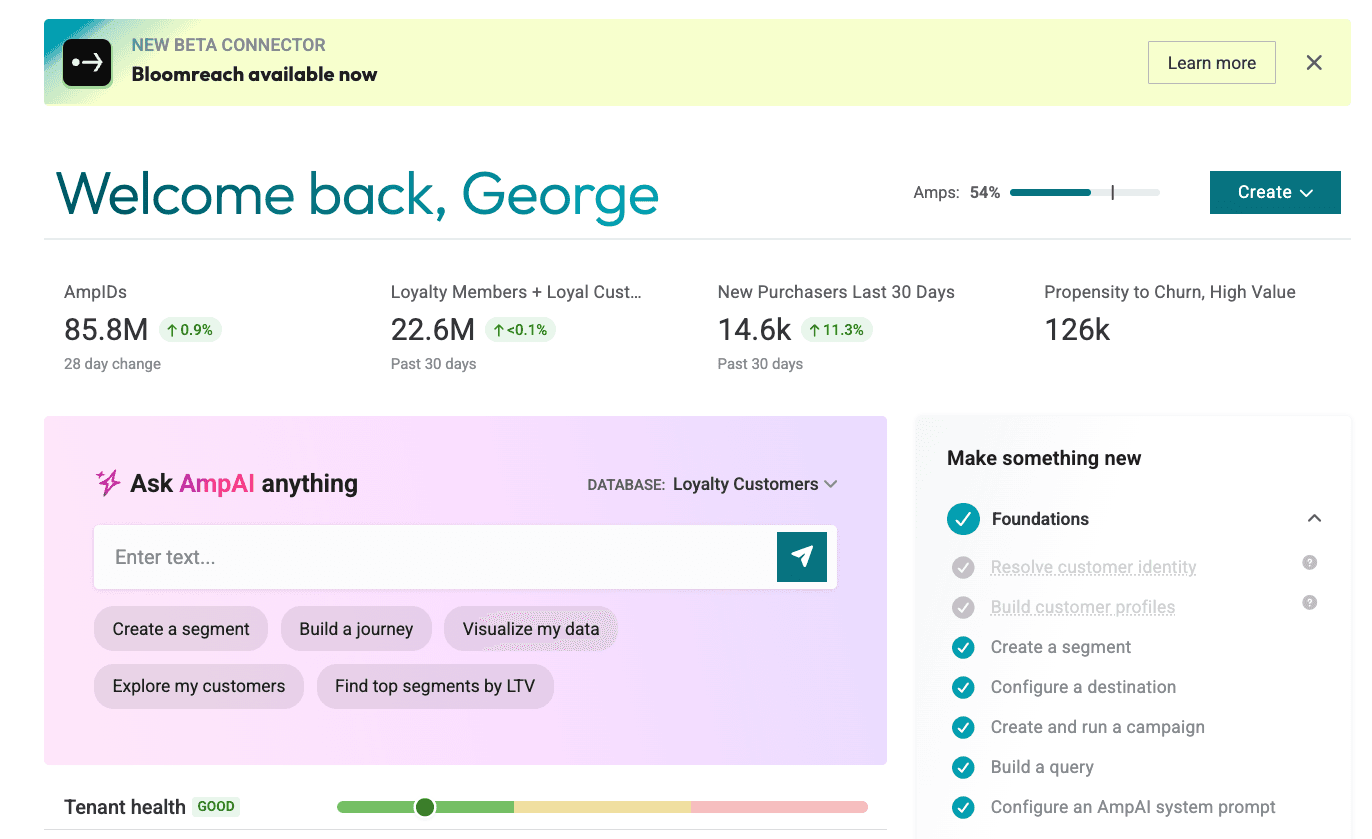
See what needs attention when you open Amperity. Home brings tenant health, Amps consumption, recent work, segment insights, and feature adoption into one view, with content tailored to your tenant configuration and permissions.
Journey Goals
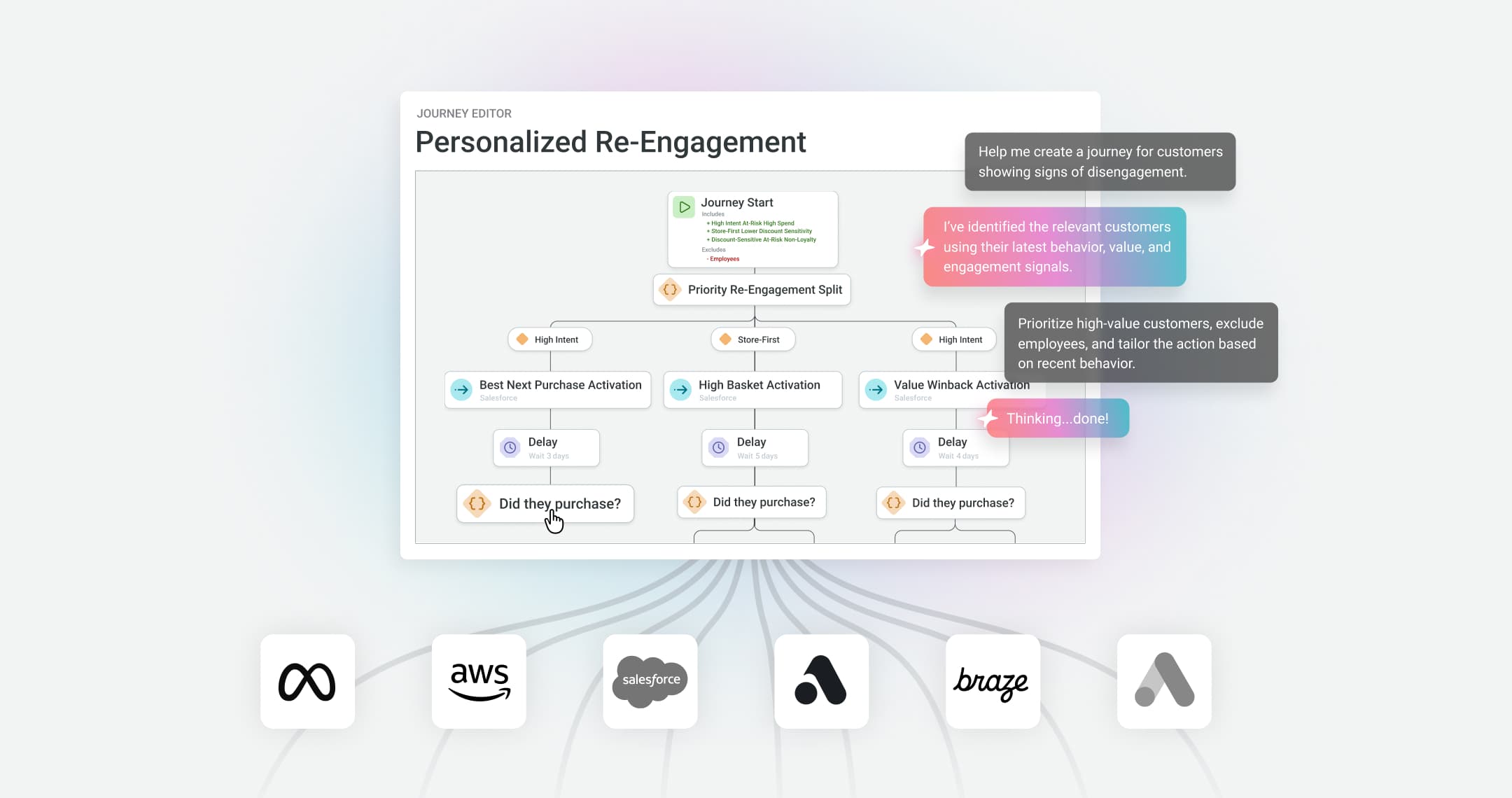
Identify which journey experiences drive meaningful customer actions. Journey Goals tracks milestones, goal achievement, and incremental lift across test and control groups, helping you compare performance and build audiences from customers who achieved a goal.
Amp Insights
Understand where your Amps go and what caused consumption changes. Ask natural-language questions from the Amps dashboard to investigate spikes, compare usage, and identify high-consuming activities. Amp Insights is in Public Preview. Availability depends on tenant configuration and permissions.
Australian AWS Cloud Presence
Keep Australian customer data resident in Australia while using the full Amperity platform. Amperity is available in the AWS Sydney and Melbourne regions, supporting local data residency, governance, analytics, and activation requirements.

Self-Service Predictive Models
Build and refine predictive models on your own. A guided setup experience lets you configure and iterate on predicted customer lifetime value and product affinity models directly in Amperity, then review model configurations, versions, and jobs in one workflow.

AI Assistant
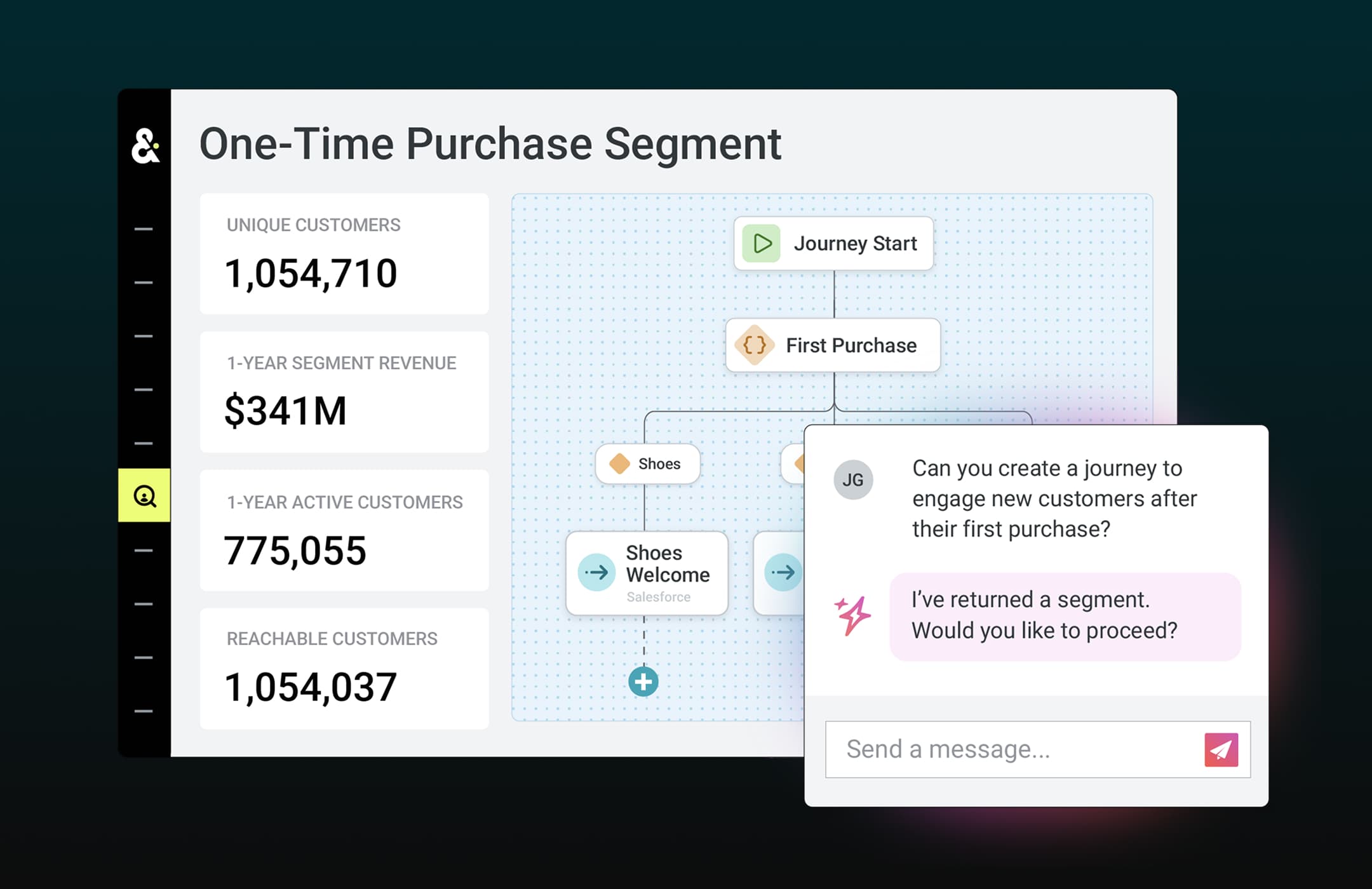
Move from campaign intent to a working segment or journey through natural-language conversation. The AI Assistant explores customer data, creates audience drafts, and builds journeys that marketers can review and refine without starting from manual configuration.
Audience Monetization
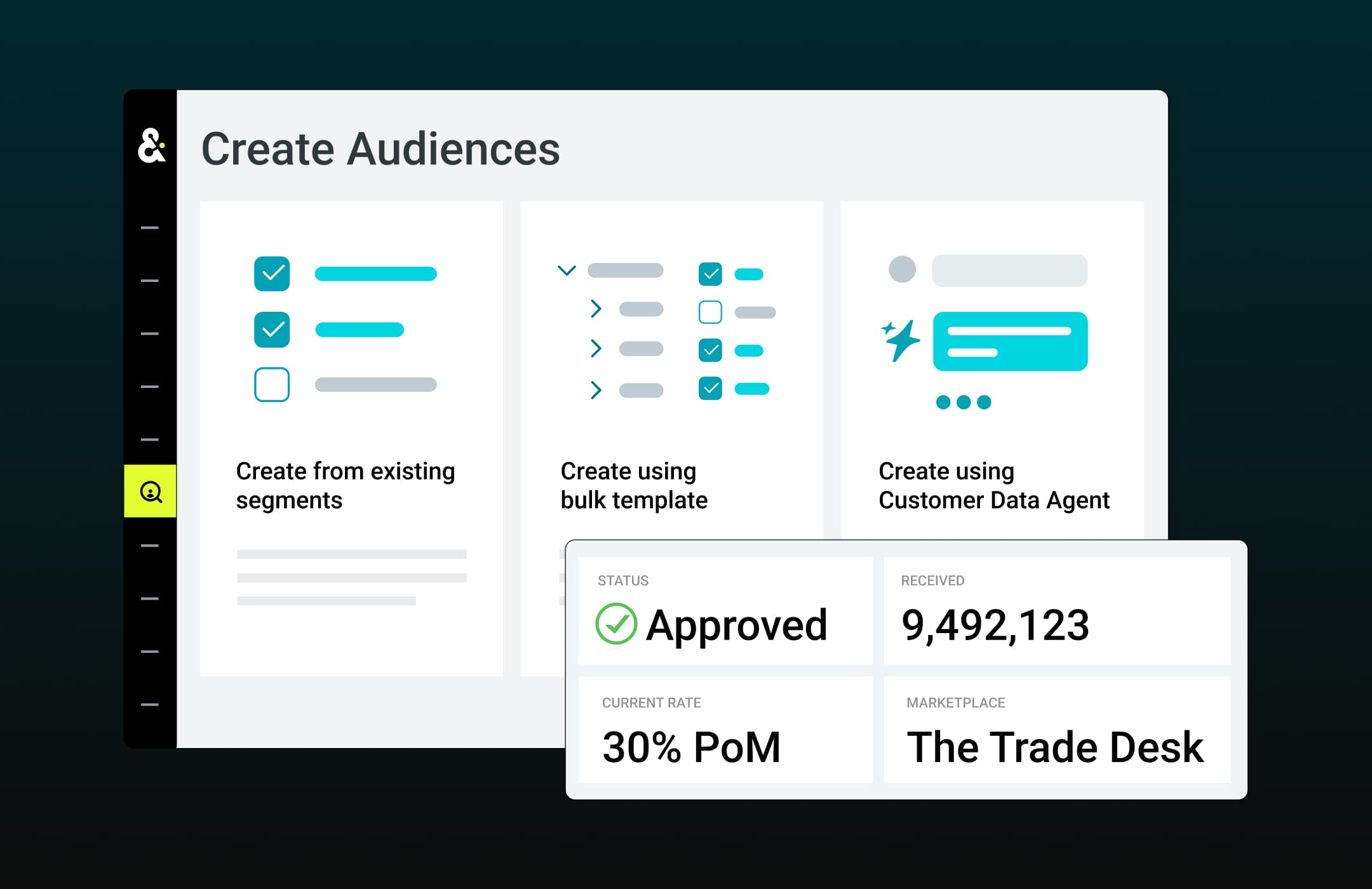
Turn unified first-party data into a new commercial opportunity. Audience Monetization helps brands package, refresh, and activate privacy-safe, UID2-based audiences through The Trade Desk Data Marketplace while retaining control over customer data and consent.
Bring Your Own Storage
Keep Amperity data in cloud storage your organization controls. Eligible new tenants can use their own Amazon S3 or Microsoft Azure storage, helping them align Amperity with existing data governance and infrastructure requirements without significant architecture changes.
Amperity Bridge for Google BigQuery
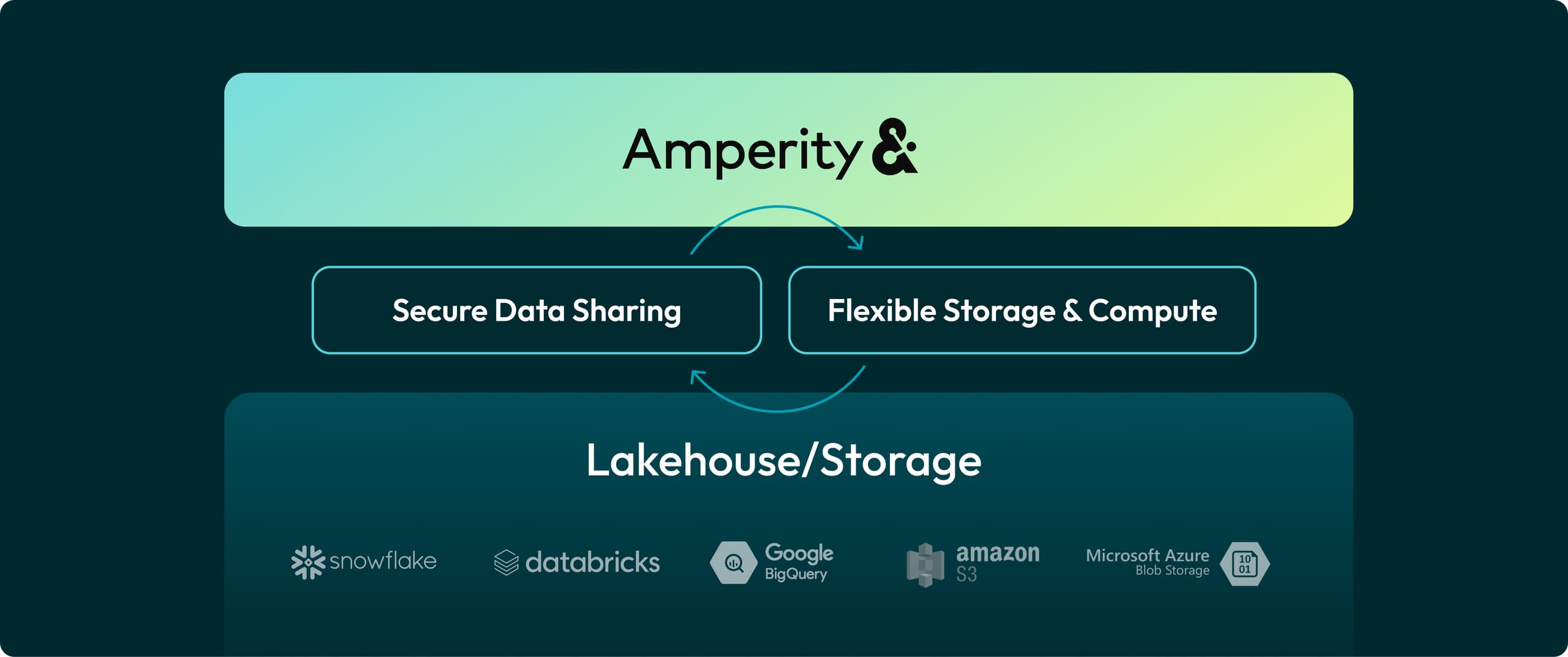
Connect Amperity and Google BigQuery in both directions without building separate file-based pipelines. Amperity Bridge uses BigQuery sharing to bring data into Amperity and make unified customer data available in BigQuery.

Real-Time Tables
Respond to customer behavior as it happens. Real-Time Tables process live events for immediate segmentation and activation, helping teams use the latest customer activity to build timely audiences and reducing dependence on scheduled batch updates.

Profile API Flexible Search
Find the right customer profile even when identifiers are incomplete or inconsistent. The Profile API supports flexible, multi-criteria searches through a single endpoint for real-time personalization and customer service workflows.

Amperity Journeys
Design and run multi-touch customer experiences from a visual canvas. Amperity Journeys lets marketers coordinate audiences, timing, decision paths, and activation across channels without building each step as a separate workflow.

Rules Editor for Stitch
Configure deterministic identity-resolution logic in a visual editor. Define and prioritize rules that cluster or separate records based on matching customer data, then arrange the order in which Stitch evaluates them.

European Unified ID (EUID)
Extend advertising identity workflows to European audiences. Amperity can generate and distribute European Unified ID tokens for brands participating in the EUID ecosystem. Access, participation approval, and Mapper credentials are required.

Stitch Benchmarks
Understand where identity-resolution quality may need attention. Stitch Benchmarks compare customer profiles against heuristic expectations, surface possible overclustering or underclustering, and provide examples and recommendations to help teams evaluate configuration changes.

Amperity Bridge for Snowflake
Use Snowflake data in Amperity and make unified customer data available in Snowflake without copying files between systems. Amperity Bridge uses Snowflake Secure Data Sharing for inbound and outbound access.

Activation IDs
Activate audiences using the identifiers each channel requires. Configure email addresses, loyalty account IDs, mobile advertising IDs, customer account IDs, or other unique identifiers as Activation IDs for precise segmentation and downstream campaign targeting.

Merge Policy Settings
Control which sources contribute the best data to each customer profile. A drag-and-drop editor lets you prioritize source tables by profile attribute, replacing SQL-based configuration for how values are selected in the Merged Customers table.